Milk Frother Vs Steam Wand Differences
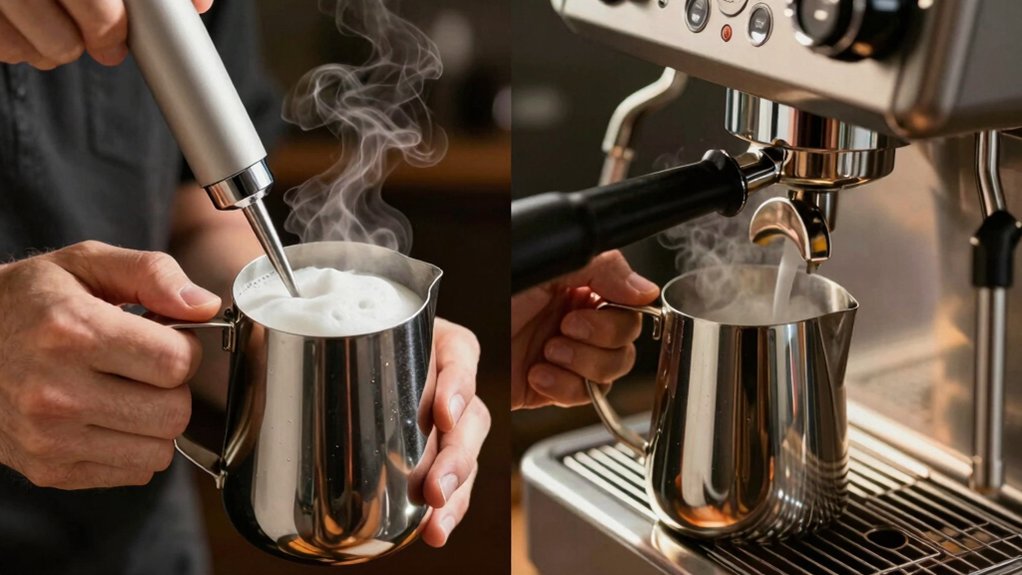
You’ll get different foam and control: A steam wand creates dense, microfoam with very fine bubbles and precise temperature/pressure control for Latte Art and espresso drinks. A standalone Milk Frother produces quicker, coarser foam with larger bubbles and preset temperatures for convenience.
A wand demands technique and more frequent cleaning; a frother is easier to use and maintain but less versatile. Below you’ll find specifics on texture, performance limits, and recommended cleaning/descaling intervals.
Quick Overview
- Steam wands produce very fine, velvety microfoam using high-pressure steam for latte art and dense textures. Standalone Milk Frothers create larger bubbles and lighter, airier foam better suited for cappuccino heads.
- Steam wands offer adjustable pressure and temperature control; however, they require more skill and technique. Electric milk frothers provide consistent preset temperatures and are easier for beginners.
- Steam wands need daily wiping and regular descaling. Frothers require periodic disassembly and monthly descaling checks.
Barista Foam Texture Comparison
How do foam textures actually differ between a milk frother and a steam wand? You’ll note barista foam varies by bubble size, integration, and mouthfeel. This texture comparison guides practical choice.
| Feature | Outcome |
|---|---|
| Bubble Size | Large vs microscopic |
| Integration | Separate layer vs protein matrix |
| Mouthfeel | Light, airy vs velvety, dense |
| Stability | Rapid separation vs long-lasting |
| Best Use | Cappuccino head vs latte art |
You’ll use a frother for quick, airy foam and cold applications. It gives visible foam layers and faster prep. You’ll rely on a steam wand when you need silky microfoam, integrated texture, and precise control for latte art. Evaluate based on drink type, speed, and required foam stability.
Pressure and Temperature Limits
Why does pressure and temperature matter so much when choosing between a milk frother and a steam wand? You need precise pressure limits and reliable temperature control to predict texture, safety, and repeatability. A steam wand uses boiler pressure, often 1–2 bars, to heat rapidly and create dense microfoam. Its higher temperatures demand skill and impose safety constraints.
Electric frothers operate at lower mechanical pressures and offer preset temperature control or cold options. This reduces risk but limits maximum heat and texture range.
- Steam wand: higher pressure limits, finer thermal gradient, steeper learning curve.
- Milk frother: limited pressure, consistent preset temperature control, safer for novices.
The trade-off is maximum texture capability versus simplicity and repeatable temperature profiles.
Cleaning and Descaling Intervals
You should wipe both frother heads and the steam wand daily to remove milk film and prevent bacterial growth. Schedule a weekly deep clean with removable parts and recommended brushes. Plan monthly descaling for machines with boilers or heating elements.
Watch for slow steam, off-taste, or reduced foam as clear signs you must descale. Keep a small brush, microfiber cloth, and manufacturer-approved descaler on hand.
Daily Wipe Down
When should you wipe the steam wand and frother parts? You should perform a daily wipe down immediately after each service session and again between milk batches to prevent protein buildup. For steam wands, purge steam, wipe with a damp cloth, and check the tip for dried residue that degrades barista foam quality. Failing to remove film leads to inconsistent steaming and hygiene risk.
For electric frothers, disassemble removable parts, rinse surfaces, and inspect seals. Motor housings need surface cleaning only. Use food-safe cleaners sparingly; avoid submerging non-dismantlable wands. Log daily actions to spot repeat clogs or performance drift.
If residue persists despite correct wipe-downs, escalate to more thorough cleaning rather than increasing wipe frequency.
Weekly Deep Clean
Although daily wipes handle surface residue, you should perform a weekly deep clean to remove buildup, sanitize hidden surfaces, and descale components that degrade performance. You’ll disassemble detachable frother parts, soak them in warm detergent, and inspect seals and whisk assemblies for wear. This preserves hygiene for milk storage and prevents bacterial growth.
For steam wands, you’ll run a controlled purge, remove tip screens if possible, and use a brush to clear occlusions that raise noise level or impair steam flow. Quantify residue removal and note any loosened fittings needing replacement. Evaluate flow rate and foam quality after reassembly. If output or sound deviates from baseline, schedule targeted maintenance. Document findings to optimize interval timing and component lifespan.
Monthly Descaling Schedule
After completing weekly deep cleans, schedule a monthly descaling to remove mineral deposits that silently degrade performance and heat transfer. You’ll target boiler passages on steam wands and internal circuits on electric frothers with a recommended descaler concentration and dwell time specified by the manufacturer.
Inspect metal dairy surfaces for limescale spots and run a rinse cycle until pH-neutral. For steam wands, purge and operate at full pressure during the cycle to force descaler through nozzle orifices. For frothers, circulate solution per instructions to avoid motor damage.
Evaluate flow rate and foam preservation after each cycle: reduced output or collapsed foam signals incomplete descale. Log dates and results, and repeat monthly in hard-water conditions or earlier if performance drops.
Cleaning Tool Recommendations
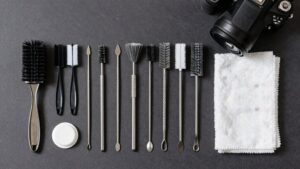
Which tools will give you the most reliable cleaning and descaling results? You’ll want a compact kit: a soft-bristle brush for frother tips, a narrow steam-wand brush, silicone wipers, and a calibrated descaling solution.
Use the soft brush daily for frothers and after each steam-wand purge to remove milk residue before it hardens. Silicone wipers prevent scratching and speed drying. Descale with the calibrated solution at manufacturer intervals; typically monthly for hard water, quarterly for soft. This practice helps protect heating elements and flow paths.
Avoid irrelevant topics like polishers or unrelated tools such as general household cleaners; they can leave residues or damage seals. Evaluate kits by compatibility, chemical concentration, and ergonomic design for consistent maintenance results.
Signs You Must Descale
Cleaning tools keep surfaces and tips free of milk deposits, but scale builds inside heaters and flow paths and needs scheduled treatment. You’ll know it’s time to descale when flow rates drop, steam pressure falls, or heating cycles lengthen: measurable performance indicators, not folklore.
Ignore descaling myths that suggest visual cleanliness equals internal health; mineral buildup is often invisible. Check manufacturer-recommended intervals and adjust for your water hardness: harder water shortens service life. Perform a conductivity or scale-test strip check if available, and log changes in output temperature and time-to-boil.
If taste or odor shifts, or the machine cycles unusually, act immediately. Regular, documented descaling prevents pump strain, heater failure, and costly technician repairs.
Frequently Asked Questions
Can I Froth Non-Dairy Milks Equally Well With Both Methods?
Yes, you can froth non-dairy milks with both methods; however, results vary. You’ll get quicker airy frothing texture from frothers on almond, oat, or soy. Meanwhile, steam wands deliver smoother, more stable microfoam with barista oat or soy if you control temperature and technique.
Evaluate protein/fat content of dairy alternatives: higher-protein options steam and whip better. Adjust milk temperature and frothing time to optimize consistency and crema compatibility.
Which Method Uses Less Electricity Overall?
A standalone milk frother typically uses less electricity overall than a steam wand system. You’ll see lower electricity consumption because frothers heat less volume for shorter durations, yielding higher frothing efficiency per watt for quick foam tasks.
Steam wand-equipped Espresso Machines draw far more power to generate pressurized steam and maintain boiler temperature. So unless you’re making many drinks continuously, a frother is the more energy-efficient option.
Can a Milk Frother Damage Delicate Glassware?
Yes, you can damage delicate glassware if you use a handheld milk frother improperly. Rapid mechanical vibration and contact can create microcracks, especially in frosted glassware or thin-walled cups.
You should use low-speed settings; avoid pressing the whisk against the sides; and prefer thicker, heat-resistant vessels. Also, assess non-dairy milk performance separately; higher foam resistance can encourage longer running times that increase stress on fragile glass.
Do Steam Wands Require Professional Installation?
Not usually, but sometimes you’ll need it: A steam wand itself doesn’t require professional installation if it’s part of a home espresso machine you assemble. However, built-in commercial units often do.
You should consider plumbing, electrical capacity, pressure regulation, and warranty terms. Improper hookups can void coverage or damage equipment. If you’re unsure about water lines, electrical load, or steam boiler integration, hire a professional for safe, code-compliant installation.
Can a Frother Reach Café-Quality Temperature for Hot Drinks?
Yes, a good frother can reach café temperatures if you use proper frothing technique. You’ll heat milk to around 60–65°C (140–149°F) by pulsing and monitoring temperature or using thermostatic frothers.
Handheld or standalone units vary; therefore, evaluate power and temperature control. High-end models consistently hit cafe temperatures and create stable foam. Cheap ones may underheat or over-aerate; this compromises texture and serving quality.
Conclusion
You’ve seen how a steam wand produces denser, milk-ready microfoam while electric frothers make lighter, airy foam. Each suits different drinks and skill levels. You’ll weigh pressure/temperature limits, maintenance frequency, and cleaning steps: daily wipe, weekly soak, monthly descale.
Use proper brushes and descaling solutions. Heed signs like reduced heat or odd tastes. Choose based on texture needs and available upkeep time; pick the tool you’ll honestly maintain.