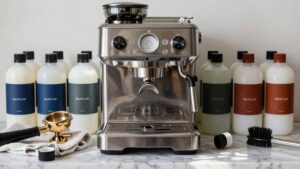
Portafilter Size Guide 51MM 54MM 58MM
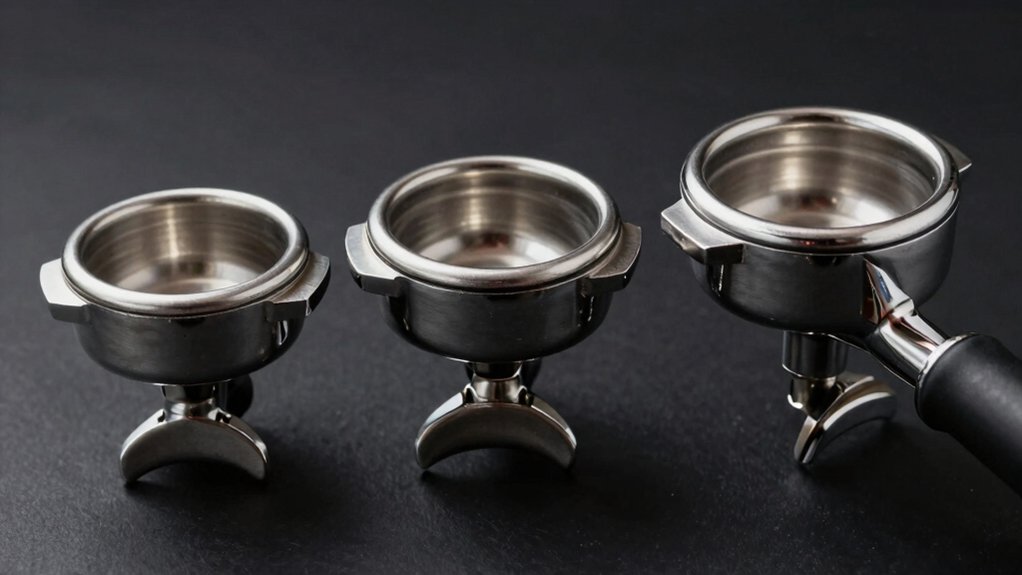
Pick 51mm for compact, budget machines if you want lighter portafilters and simpler handling. Choose 54mm for mid-range Breville/Sage-style units that balance ergonomics, dose control, and accessory availability. Opt for 57–58mm when you need commercial-grade tolerance, the widest basket choice, and more forgiving extraction with less channeling.
Check your group diameter, ear spacing, and rim fit before swapping parts to avoid leaks or voided warranties. Keep going and you’ll learn practical fit and pressure checks.
Quick Overview
- 51mm portafilters are common on entry-level machines and require finer, consistent dosing to avoid over-extraction and channeling.
- 54mm portafilters (Breville/Sage mid-range) balance ease of use with better crema and wider accessory availability.
- 57–58mm portafilters are standard on commercial and premium home machines. They offer more even extraction and tolerance for grind variation.
- Always measure across the basket seat and confirm manufacturer specs, ear spacing, and rim thickness to ensure proper fit and warranty compliance.
- Larger diameters reduce channeling and dose sensitivity. Smaller ones demand tighter dose control and coarser grinds.
Brew Group Diameter Comparison
Wondering which brew group diameter suits your setup? You’ll choose 51mm for budget machines, 54mm for mid-range Breville/Sage models, and 58mm for commercial or premium home rigs. Diameter affects water distribution, crema stability, dose sensitivity, and accessory availability; that drives pricing variations and warranty implications when swapping parts.
| Diameter | Use Case |
|---|---|
| 51mm | Entry-level, focused flow |
| 54mm | Mid-range, balanced extraction |
| 57–58mm | Commercial/premium, even extraction |
| Other | Niche sizes, limited accessories |
You should measure your group and match manufacturer specs. Larger diameters reduce channeling and give more forgiving yields. Smaller ones simplify handling but need coarser grind and tighter dose control. Always confirm compatibility before buying to avoid voiding warranty.
8mm Basket Compatibility Checklist
How do you quickly verify that a basket will fit your portafilter and group? You measure the portafilter diameter across the basket seat, confirming specs on the machine manual or stamped on the filter. Check for ear spacing and rim thickness; same diameter doesn’t guarantee a snug fit. Confirm basket compatibility by matching nominal size (51/54/58mm) and testing clearance in the group slot.
Visualize the basket dropped into the portafilter: rims align, no wobble, ears clear the group gasket. Picture measuring with calipers: outer rim, inner rim, and depth readings. Imagine a trial insert; the basket sits flush, spring clip (if present) engages, and the spout lines up.
This method keeps swaps efficient. It avoids leaks and preserves extraction consistency.
Backflush Pressure Limits
When you backflush, keep pressure within the machine’s recommended range, usually under 15 bar at the group, to avoid overstressing gaskets and portafilter ears. Use the right detergent sparingly because harsh chemicals and excessive pressure accelerate seal wear and can mask leaks.
Always measure pressure with a gauge or a controlled test kit; this allows you to confirm limits without risking damage.
Recommended Backflush Pressure
Curious about how hard you should backflush your machine? Aim for controlled pressure: use the same pump pressure you brew with (9–10 bar nominal), but avoid forcing excessive force during short detergent cycles. You want to relieve oils and grounds without creating abnormal backpressure effects that stress group seals and dispersion screens.
For routine maintenance, run short 5–10 second cycles with stable pump output. Pause between bursts to prevent heat and pressure build-up.
Check machine-specific service docs for recommended durations and any lower-pressure modes. Some compact home units tolerate lighter cycles. Track maintenance considerations: inspect gaskets, screens and pressure gauges regularly, and replace worn parts promptly. Proper procedure keeps pressure transients within safe limits and prolongs group longevity.
Machine Pressure Limits
What pressure should you let your machine tolerate during backflushing? You should target backflush limits around 0.5–1.0 bar differential across the group head when using detergent cycles. Peak machine pressure remains the pump’s brew pressure (9–12 bar); however, don’t confuse that with safe cleaning stress.
Monitor for spikes above 1.5 bar differential during blind-portafilter cycles; those indicate excessive restriction or blocked solenoid valves. Keep sessions short, avoid continuous backflush runs, and allow cool-down pauses to prevent valve overheating. Regularly check pressure gauges and service group seals if you see unstable readings.
Respecting conservative backflush limits preserves internal valves and electronics while letting you maintain consistent brewing pressure. This approach prolongs machine life without stressing gaskets or portafilter interfaces.
Gasket And Portafilter Stress
You’ve already learned safe backflush pressure targets and how spikes signal valve or restriction issues. Now consider how those pressures load the group gasket and portafilter. When you backflush, trapped pressure exerts axial and torsional loads against the gasket seat.
Repeated spikes accelerate gasket wear; flattening or cutting the seal causes leakage and unstable pressure to follow. Portafilter twist under sudden backpressure isn’t cosmetic: it torques the ears and can deform metal or loosen alignment, worsening seal contact.
Monitor pressure profiles and limit the duration and frequency of high-pressure cycles. Use a snug, correctly sized portafilter and replace gaskets on a schedule based on service hours and observed degradation. Small prevention steps reduce downtime and maintain consistent extraction.
Detergent Effects On Seals
How do common backflush detergents interact with group gaskets and portafilter seals under pressure? You’ll find that detergent effects depend on chemistry, concentration, and contact time: alkaline bleaches and caustic powders swell nitrile and silicone differently, softening some gaskets while leaving others dimensionally stable.
Under backflush pressure, softened seals compress more, increasing extrusion risk and accelerating wear. Incompatible detergents can cause hardening and cracking over repeated cycles. To manage seals compatibility, match detergent type to gasket material (silicone-tolerant, nitrile-safe formulas), use manufacturer-recommended dilutions, and limit soak duration.
Inspect seals regularly for flattening, micro-tears, or permanent set. When you control detergent effects deliberately, you preserve seal integrity, maintain correct grouphead fit, and avoid premature replacements.
Measuring Pressure Safely
Curious about safe backflush pressure limits? You’ll want to approach measuring pressure with measured care: attach a gauge to the group head or use an inline tester. Run brief flush cycles and read static and dynamic values. Typical safe limits sit below the pump’s max; aim for 9–11 bar during extraction checks and keep backflush peaks under manufacturer-specified thresholds to avoid seal or valve damage.
Safety considerations include venting steam before disconnecting gauges, using rated fittings, and avoiding prolonged blocked-port cycles that spike pressure and heat. Log readings, compare across portafilter sizes (58mm groups show steadier curves), and consult service manuals. If you see anomalies, stop, inspect seals and solenoids, then retest.
Frequently Asked Questions
Can I Use a 58MM Tamper on a 54MM Basket?
No, you shouldn’t use a 58mm tamper on a 54mm basket; it won’t fit and will crush edges or leave an uneven puck. You’ll want a properly sized tamper for consistent extraction.
As practical advice, keep a 54mm tamper and spare baskets matched to your machine. Think of this like unrelated topic trivia: mismatched gear is like using a giant wrench on a tiny bolt; random trivia with a real-world consequence.
How Does Portafilter Weight Affect Espresso Extraction?
Portafilter weight impacts extraction by stabilizing puck pressure and shot consistency. Heavier portafilters reduce vibration; they let you maintain uniform tamping and steady water flow. As a result, espresso flavor stays fuller and more balanced.
You’ll notice grind size matters with weight: finer grinds plus a heavy portafilter can slow flow and increase extraction. Coarser grinds need less mass to avoid under-extraction. Adjust grind to dial in taste.
Are Bottomless Portafilters Available for 51MM Sizes?
Yes, bottomless portafilters exist for 51mm; though they’re rarer than 58mm versions. You’ll use them for bottomless experiments to observe channeling and crema behavior. They force precise grinder calibration and dose distribution.
Expect limited aftermarket choices, possible custom machining, and fewer compatible baskets. If you want visibility and feedback on technique with a compact machine, sourcing or custom-making a 51mm bottomless unit is practical and worthwhile.
Do Pellet Tampers Work With Different Portafilter Diameters?
Yes, pellet tampers can work across different portafilter diameters, but you’ll need to check diameter compatibility before buying. Match the tamping head to your basket diameter or choose an adjustable model to avoid uneven pressure or edge gaps.
You’ll also want a stable base and consistent pellet flow for repeatable puck density. If you plan to switch machines, prefer interchangeable heads or oversized designs with adapters for precise tamping.
Can I Retrofit a 54MM Portafilter to a 58MM Machine?
You can, but retrofit compatibility is limited and requires grinding or adapter sleeves. You’ll often need a custom sleeve or new spouted portafilter to fit a 58mm group.
Check clearance for the ears and group seal; machine tolerances matter. Tamper compatibility changes too: a 54mm tamper won’t fit a 58mm basket, so you’ll need a matching tamper or an adjustable one.
Expect trade-offs in seal, steam wand reach, and warranty.
Conclusion
You’ll now understand how brew-group diameters (51mm, 54mm, 58mm) affect basket fit, gasket stress, and backflush pressure limits. Check 8mm basket compatibility before swapping. Keep backflush pressure within the machine’s recommended limits to avoid overloading seals or portafilters.
Use manufacturer-approved detergents, measure pressure safely with proper gauges, and inspect gaskets regularly. Follow these practical precautions to protect components, maintain extraction consistency, and avoid costly repairs.