Semi Automatic Vs Super Automatic Espresso
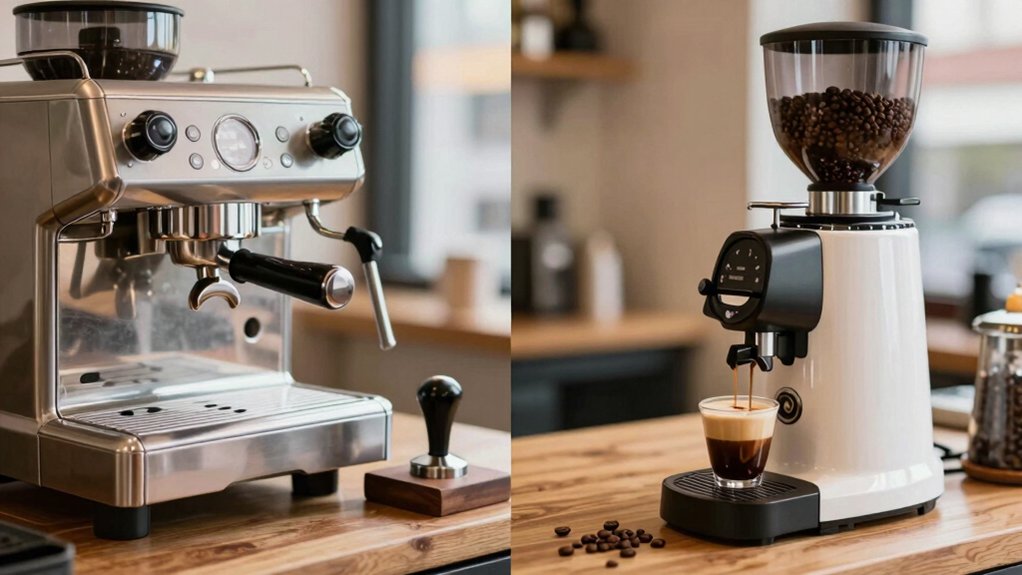
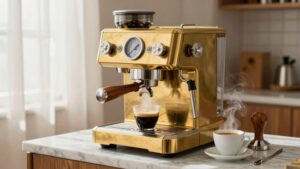
You’ll get more control and fuller extraction with a semi-automatic machine: it uses larger doses (14–20 g), lets you fine-tune grind, dose and tamp, and targets classic 1:2 ratios for richer flavor. However, it needs frequent adjustments and skill.
A super-automatic trades peak complexity for hands-off consistency; it uses smaller doses and higher dilution for repeatable shots with less intervention. Keep going and you’ll uncover practical tips for tuning temperature, dosing and grind to match your goals.
Quick Overview
- Semi-automatic machines use larger doses (14–20g) and allow precise control over yield and extraction ratios, commonly ~1:2.
- Super-automatic machines dose smaller amounts (6–10g) and prioritize hands-off consistency with higher dilution, ~1:4.
- Semi-autos demand tighter grind, dosing precision, and frequent adjustments to optimize flavor. Super-autos automate grinding, tamping, and dosing. This reduces user skill but limits micro-adjustments.
- Choose semi-automatic for control and peak flavor; choose super-automatic for convenience and repeatable shots.
Brew Yield & Extraction Ratios
Curious how shot yields and extraction ratios change between machine types? You’ll see clear trade-offs: semi-automatics let you control dose and aim for classic 1:2 extraction ratios, yielding 25–60ml depending on timing and skill. Super-automatics default to smaller doses and higher dilution, often ~1:4 with ~40ml output.
| Machine Type | Typical Result |
|---|---|
| Semi-Automatic | 14–20g in → 25–60ml out; extraction ratio ~1:1.5–1:3; higher crema, nuanced flavor |
| Super-Automatic | 6–10g in → ~40ml out; extraction ratio ~1:4; consistent, less intensity |
You’ll favor semi-autos when you need precise brew yield and extraction ratio control. Choose super-autos for hands-off, repeatable shots.
PID Temperature Control Tips
Shot temperature directly shapes extraction chemistry. Once you’ve settled on dose and yield, you’ll want tight control over brew temperature; that’s where PID systems shine. You’ll use PID to stabilize boiler or group temp, relying on accurate temp sensors and minimal overshoot. Watch power draw during heat cycles; excessive cycling stresses components and skews stability.
- Calibrate temp sensors against a reference probe to ensure true brew temp.
- Tune PID gains conservatively: reduce integral windup to avoid slow drift.
- Stagger heat demand to limit peak power draw and improve steadiness.
- Implement pre-infusion temp profiling for consistency without rapid cycling.
A disciplined PID setup yields repeatable extraction, clearer dialing, and less equipment wear.
Grind Size and Dosing Tolerances
You’ll find grind consistency and dose weight precision are the most critical levers for shot quality, with semi-automatics demanding tighter control than super-automatics. Small variances in grind or grams quickly change extraction and require frequent adjustments on manual grinders and dosing routines.
Contrast that with super-automatic systems: they tolerate broader variance by compensating with programmed dose and grind settings. However, they still suffer flavor shifts if you push limits.
Grind Consistency Needs
How precise does your grind and dose need to be for reliable espresso? You need tight control: grind uniformity affects extraction rate and channeling, so particle distribution must be consistent.
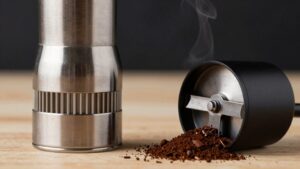
On a semi-automatic setup, you’ll manage burrs, adjust grind size often, and monitor burr wear that widens distribution over time. Super-automatic grinders compensate with programmed steps and dosing mechanisms, reducing day-to-day variability; however, they are still vulnerable to worn burrs and retained fines.
Dosing tolerances are wider on automatics due to internal correction, whereas you’ll need finer repeatability on a semi to hit target flow and yield. In practice, aim for minimal variation in particle size and dose volume. Track grinder maintenance and replace burrs before uniformity degrades noticeably.
Dose Weight Precision
Want a reproducible espresso puck? You’ll rely on tight control of grind size and dose weight. For semi-automatic setups, you control dosing; thus, dose accuracy depends on your grinder, scale, and tamping consistency. Measure every shot, adjust grind in small increments, and log results to isolate changes.
Super-automatic machines centralize those variables. Their built-in grinder and dosing cams can deliver consistent grams shot-to-shot; however, they demand precise machine calibration to maintain that repeatability. Check settings regularly, clean dosing mechanisms, and verify output with a scale.
In both systems, small gram differences change extraction dynamics. Aim for reproducible inputs rather than chasing flavor. Prioritize dose accuracy and routine machine calibration to stabilize your shots.
Tolerance For Variance
Having established that reproducible dose weight is the foundation, shift focus to how much variance your grinder and dosing can tolerate before extraction and flavor suffer.
You’ll find semi-automatic setups demand tighter grind-size and dose tolerances; a few microns or a half-gram shift changes flow patterns, increases channeling, and degrades crema. Super-automatics accept broader variance because integrated grinders and calibrated dosing reduce shock to extraction; this improves turbulence handling and lowers shot-to-shot swing.
That said, excessive slack still yields flat, uneven cups and harms foam stability during steaming. Measure tolerance by tracking output weight and extraction time after deliberate small adjustments. If sensory change is noticeable, you’re outside acceptable limits.
Control strategy: tighter tolerances for semi-automatic, pragmatic leeway for super-automatic.
Adjustment Frequency Required
When should you tweak grind size or dose? You adjust whenever shot timing, flow, or puck resistance drifts from target. With a semi-automatic, you’ll perform frequent micro-adjustments; sometimes daily; because manual grinders, dosing variability, and tamp technique create narrow tolerances. That higher adjustment frequency gives you control to chase taste and respond to bean age, humidity, or roast changes.
Super-automatic machines reduce that need. Built-in grinders and programmed dosing stabilize output, so adjustments are periodic: weeks to months; unless beans change. But automation limits mean you can’t fine-tune tamp or precise dose as a pro would. The machine compensates within set tolerances. Choose semi-auto for active calibration. Choose super-auto if you prefer minimal intervention and predictable consistency.
Impact On Extraction
How tightly do grind size and dose tolerances control extraction? You’ll find they govern extraction speed and final cup balance more than machine class. With a semi-automatic, you adjust grind and dose precisely; small changes shift flow rates, pressure profile, and soluble yield. You can dial shot sweetness and crema stability.
Super-automatic grinders and dosing systems simplify that by locking tolerances, which yields consistent extraction speed but limits micro-adjustment. That consistency helps novices; yet, it prevents nuanced corrections for bean variability or roast development. Practically, if you chase peak flavor and reliable crema, a semi gives you the control to tune grind and dose tolerances. If you prioritize repeatability with minimal skill, a super offers predictable extraction at the cost of tweakability.
Frequently Asked Questions
Can I Use Pre-Ground Coffee in a Super Automatic Machine?
Yes, you can use pre-ground coffee, but pre-ground compatibility depends on your machine’s grinder integration. If your super automatic has a bypass doser or allows direct dosing, you’ll be fine.
Expect less freshness and variable extraction because built-in grinders optimize grind size and distribution. Use freshly opened, fine espresso grind; store properly; and adjust strength settings. For best results, use whole beans and rely on grinder integration.
How Often Do Super Automatics Need Professional Servicing?
You should schedule professional maintenance every 12–24 months, depending on usage and water hardness. Regular professional maintenance preserves machine longevity, replaces wear parts, and keeps brew group seals tight: you keep a flavorful crema.
You’ll still perform user maintenance weekly. This includes cleaning the milk system, emptying grounds, and descaling as needed. Track service intervals from your manual and local technician recommendations to avoid costly repairs and performance decline.
Can I Use My Own Grinder With a Super Automatic?
Yes, you can use your own grinder with some super automatics if the machine supports concept compatibility for external dosing or bypass hoppers. Check the manufacturer’s interface and feed system; many models expect integrated grinders and won’t accept direct dosing.
Using your grinder changes the maintenance schedule. You’ll maintain both devices, adjust grind-to-dose timing, and watch for increased wear or clogs. Test and calibrate to ensure consistent extraction.
Which Machine Type Is Better for Latte Art Beginners?
Choose a semi-automatic machine for latte art beginners. You’ll learn latte art basics and control extraction, steam pressure, and wand technique: these are essential for developing microfoam. Semi-automatic machine ergonomics (accessible steam wand, stable portafilter, intuitive layout) help practice consistent pours.
Super-automatic machines make drinks fast but limit wand control and customization; this slows skill growth. With a semi-automatic, you’ll refine technique and adjust variables to improve your latte art.
Do Super Automatics Work Well With Hard Water?
Not really, hard water undermines super automatic reliability unless you address it. You’ll face scale buildup that increases hardware maintenance, reduces performance, and shortens component life.
You should install a good water filter or softener, follow the manufacturer’s descaling schedule, and replace removable water-system parts as recommended. With proactive filtration and regular servicing, you’ll preserve reliability and minimize costly hardware maintenance over time.
Conclusion
You’ll choose between semi-automatic and super-automatic machines based on how much control you want and how precise you can be. Semi-autos demand consistent grind, tight dose weights, frequent adjustments, and PID tuning to hit target yields and extraction ratios. They reward skill with superior extraction.
Super-autos tolerate wider grind and dosing variance; they reduce adjustment frequency and simplify PID/temperature concerns. However, they cap peak extraction potential. Match the machine to your tolerance for hands-on precision.