Drip Coffee Grind Size Guide
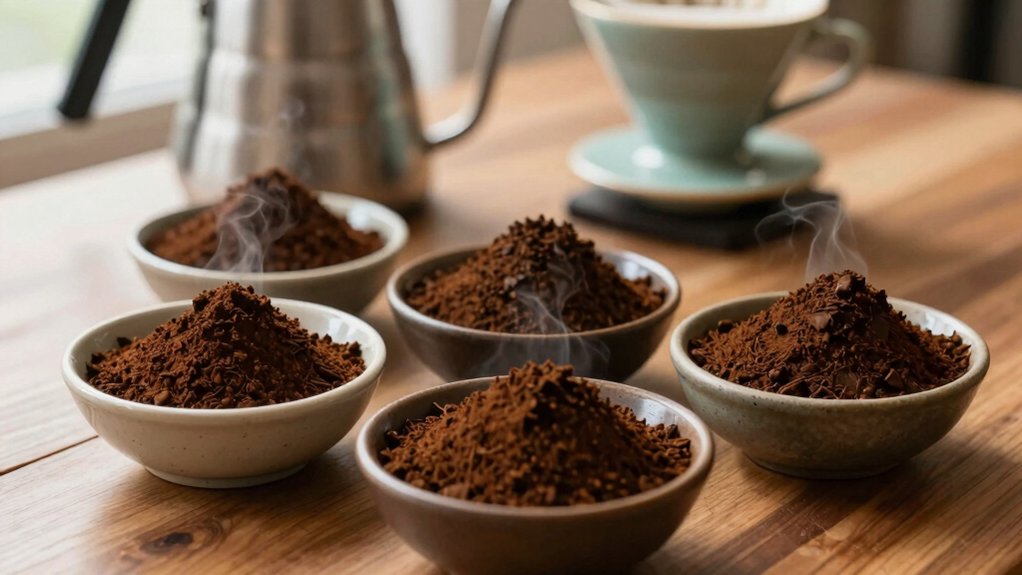
For drip coffee, use a medium grind as your starting point and aim for a 1:16 coffee-to-water ratio. Finer grinds slow flow and boost extraction, risking bitterness. Coarser grinds speed flow and can taste sour or weak.
Match grind to your basket: narrow baskets need slightly finer, while wide baskets tolerate coarser. Adjust a click finer if brew time is short; adjust coarser if it drags. Keep notes. If you want more detail, keep going for practical tuning tips.
Quick Overview
- Use a medium grind for drip coffee as a starting point to balance extraction and flow.
- Finer grinds slow flow and increase extraction; this risks bitterness if over-extracted. Coarser grinds speed flow and reduce extraction; this risks sour or weak flavors.
- Adjust grind one click finer if brew tastes weak. Adjust one click coarser if it tastes harsh.
- Match grind to basket size and wall height: narrower and taller baskets usually need slightly finer grinds.
Grind Size vs Brew Time
How does grind size change your brew time and flavor? You control extraction by tuning grind size: finer grinds slow flow and risk bitterness; coarser grinds speed flow and risk sourness, while medium balances both for drip.
Keep grind consistency high and use dosing precision to repeat results. Adjust a click finer if your brew tastes weak or coarser if it’s harsh.
| Grind Level | Brew Time | Typical Outcome |
|---|---|---|
| Fine | 2–3 min | Bright, can over-extract |
| Medium | 3–5 min | Balanced, ideal for drip |
| Coarse | 5+ min | Muted, can under-extract |
Small tweaks matter: uniform particles prevent channeling and preserve predictable flow across brews.
Brew Ratios & Extraction Targets
Want coffee that consistently tastes the way you like? You’ll control two main variables: brew ratio and extraction yield. Use a sensible starting ratio of about 1:16 (coffee to water) and adjust for strength. The extraction target is 18–22% soluble yield; aim near 20% for balanced flavors.
Grind size and brew time work together: coarser grinds shorten extraction, while finer grinds lengthen it. Keep notes and tweak small changes.
- Start 1:16 ratio; then test 1:15 or 1:17 for strength preferences.
- Aim for 18–22% extraction; near 20% hits balance.
- If brew time runs short, slightly finer grind size.
- If brew time drags, coarsen grind to avoid bitterness.
Filter Basket Size Limits
When you size your filter basket, pay attention to diameter limits and wall height since they control flow rate and brew capacity.
Check mesh or perforation specs and whether standard paper filters seat properly. A mismatch can cause channeling or soggy beds.
Match capacity to your chosen grind: finer grinds need more surface area and room, while coarser grinds tolerate smaller baskets.
Basket Diameter Limits
Curious about why your filter basket size matters? Your basket diameter directly affects how water spreads over grounds and how grind size performs. A narrow basket concentrates flow; too fine a grind clogs and slows extraction.
A wide basket promotes even bed depth but can let water channel if your grind is too coarse. Match medium grind size (sand-like) to the basket diameter: smaller diameters need slightly coarser settings to maintain flow. Larger diameters often require a bit finer grind to avoid under-extraction in the center.
When adjusting, change grind in small steps and note brew time and taste. Measure basket diameter, record settings, and iterate until extraction and flavor balance consistently match your preference.
Wall Height Constraints
How does basket wall height affect your drip brew? Wall height changes how water pools and how grounds bed. You’ll notice differences in extraction and flow. Taller walls hold a deeper bed, increasing contact time and slowing drainage; that helps a medium grind reach balanced extraction without turning muddy.
Shorter walls reduce headroom, speeding flow and risking under-extraction unless you adjust grind or dose. Also, check ceiling clearance in your machine: low clearance can limit basket height and force shallower beds. When choosing or modifying a basket, match wall height to your grinder’s output and brew cycle; aim for consistent bed depth that supports a 4–5 minute brew with medium grind for reliable flavor.
Mesh And Perforation
If your basket walls influence bed depth and flow, the size and pattern of mesh or perforations determine how that water moves through the grounds. You’ll notice finer mesh textures slow flow slightly, supporting longer contact with a medium grind and reducing channeling.
Larger perforation patterns speed drainage, which can push extraction toward under-developed flavors if your grind’s too coarse. Match mesh textures to your grind: tighter meshes suit slightly coarser medium grinds, while open patterns work with standard medium sand-like particles.
Also consider uniformity: consistent perforation patterns promote even saturation across the bed. If you change basket inserts or upgrade a machine, test brew with small adjustments to grind and dose until flow and extraction balance for clean, balanced drip coffee.
Filter Paper Compatibility
Which filter paper fits your basket affects extraction more than you might expect. Paper size and shape must match the basket’s diameter and depth to keep the grounds bed consistent and the flow rate predictable. Check compatibility considerations before brewing: a too-small round paper folds and channels, speeding flow and risking under-extraction. A too-large cone bunches and slows flow, causing over-extraction.
Match paper thickness to your machine and expected grind size. Medium grind pairs well with standard medium-weight papers; finer grinds benefit from slightly heavier paper to prevent clogging. Measure basket dimensions, note cone versus flat-bottom designs, and buy accordingly. Proper filter paper choice keeps extraction even, lets your grind size perform as intended, and yields a balanced cup.
Capacity Versus Grind
Because your filter basket has a fixed volume, the grind size you choose directly affects how much coffee it can hold and how evenly water can flow through the bed. You’ll find capacity vs grind is a practical trade-off: a coarser grind occupies more volume with larger voids. Therefore, you might hit the basket’s rim sooner and reduce brew depth. A finer grind packs more densely, increasing weight but slowing flow.
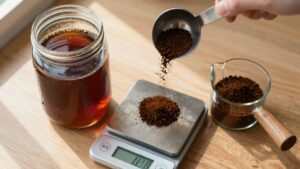
Match grind vs capacity by measuring dose against basket volume. Stick to recommended 20 g per 8 oz cup ratios and adjust grind to avoid overflow or channeling. Small grind changes tune extraction without changing dose. Aim for medium (sand-like) to balance capacity, flow, and consistent flavor.
Frequently Asked Questions
How Do I Store Ground Coffee to Maintain Freshness?
You should store ground coffee in an airtight, opaque container at cool room temperature to maximize freshness preservation. Don’t refrigerate or freeze daily-use grounds; condensation and odors will harm flavor.
Buy smaller amounts and grind just before brewing when possible. Keep beans or grounds away from light, heat, moisture, and air. Label with roast date and rotate stock so you’re always using the freshest grounds for best flavor.
Can I Use Pre-Ground Coffee in a Drip Machine?
Yes, you can use pre-ground coffee in a drip machine, but pre-ground viability depends on freshness and consistency. You’ll face grind size trade-offs: supermarket grounds might be too fine or too coarse for your brewer; this affects extraction and flavor.
Store it airtight, cool, and dark to slow staling. If you want better taste, buy whole beans and grind to a medium, sand-like texture just before brewing.
Does Water Temperature Affect Extraction for Drip Coffee?
Yes. Does water temperature affect extraction efficiency? You’ll find hotter water extracts solubles faster, boosting extraction efficiency; while cooler water slows it and risks under-extraction. Aim for 195–205°F (90–96°C) for balanced drip brewing.
Small temperature shifts change flavor: too hot yields bitterness, too cool tastes weak. You should adjust grind and dose slightly if you change temperature to keep extraction balanced and repeatable.
How Often Should I Descale or Clean My Drip Brewer?
You should descale frequency at least every 1–3 months and perform mineral buildup cleanup whenever you notice slower brewing or off flavors. If you have hard water, do it monthly; with soft or filtered water, every 2–3 months suffices.
Run a vinegar or citric acid descaling cycle, then flush with several water-only cycles. Wipe removable parts weekly and deep-clean the carafe and filter basket after each use.
Will Grind Size Vary by Coffee Bean Origin or Roast?
Yes, grind size can vary by coffee origin and roast level. You’ll adjust grind finer for denser, darker-roasted beans to extract sugars efficiently. You should use slightly coarser for lighter roasts or less dense origins to avoid bitterness.
Taste and extraction guide you: if the cup’s sour, grind finer; if it’s bitter, go coarser. Keep small incremental changes and note origin and roast level to recreate your best brews.
Conclusion
You’ve learned how grind size shapes brew time, extraction, and flavor. You have also learned how basket size, wall height, mesh, and filter paper all change what grind works best. Use finer grinds for smaller baskets or slower pours. Use coarser grinds for larger diameters and faster flow, and match capacity to grind to avoid under- or over-extraction.
Keep tasting and adjusting ratios until your drip setup consistently delivers the balance and clarity you want.