How to Reduce Bitterness in Drip Coffee
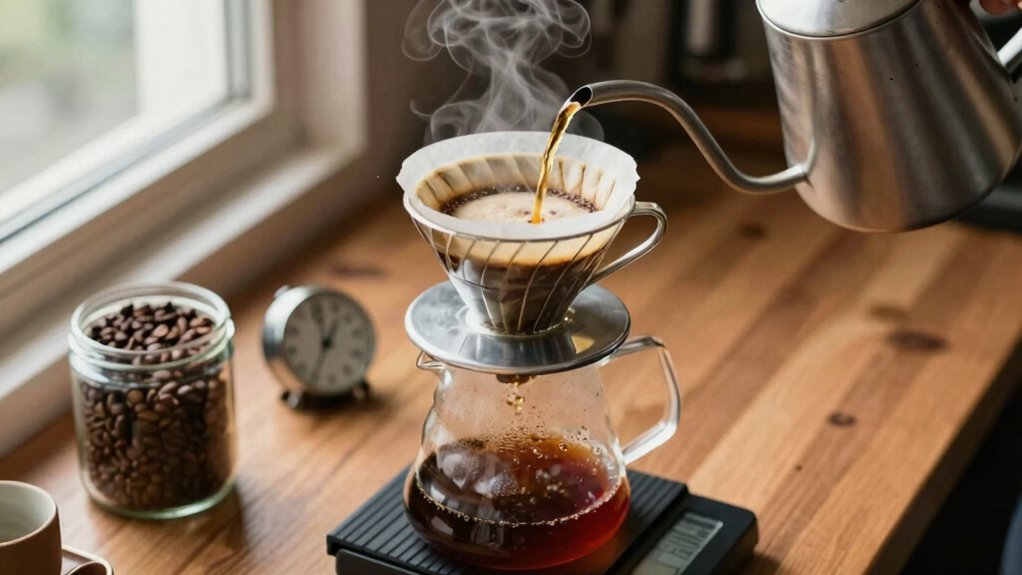
Cut bitterness by grinding slightly coarser so extraction slows and fewer harsh solids hit your cup. Aim for even particles to avoid simultaneous over- and under-extraction.
Use water at 195–205°F and keep temperature steady so sweet, volatile notes aren’t lost. Start with a 1:16 ratio on a scale and nudge toward 1:17–1:18 for a softer profile. You may also coarsen the grind if bitterness persists.
Try these tweaks, and you’ll uncover more targeted tweaks ahead.
Quick Overview
- Use a coarser, more uniform grind to slow extraction and reduce bitter fines.
- Lower brew temperature to 195–200°F and maintain stability throughout the brew.
- Increase water-to-coffee ratio toward 1:17–1:18 to soften bitterness and brighten sweetness.
- Calibrate and use a reliable scale; change only one variable at a time for repeatable tweaks.
- For darker roasts, prefer leaner ratios and slightly coarser grinds to avoid pronounced bitterness.
Grind Size vs Extraction Rate
How quickly your coffee releases its flavors comes down to grind size: finer particles expose far more surface area and pull soluble compounds rapidly, while coarser particles slow extraction and favor brighter, cleaner notes. You’ll taste immediate sweetness with medium-fine; however, you risk bitter phenolics if contact runs long.
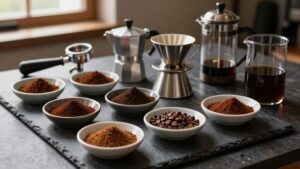
Aim for uniform particles. Uneven grinding gives simultaneous over- and under-extraction. Adjust coarser when bitterness appears, especially with low-end grinders that produce extra fines. Monitor extraction rate by brew time and TDS: faster rates mean higher immediate solubles, while slower rates preserve clarity. Visualize the particle field:
| Grind Texture | Sensory Image |
|---|---|
| Fine | Powdered sugar, fast bite |
| Medium-Fine | Table salt, fuller body |
| Medium | Beach sand, balanced clarity |
| Coarse | Sea salt, bright acidity |
Brew Temperature Targets
Curious about the exact heat you should aim for? You want water between 195°F and 205°F to balance sweetness and acidity while avoiding bitter over-extraction. Focus on temperature stability; spikes or rapid drops pull uneven compounds. Use tools that offer precise control or wait 30–45 seconds after boiling to reach the sweet spot.
Prioritize heat retention in your kettle and brewer so the brew bed stays consistent during bloom and draw.
- Aim 195°F for dark roasts to prevent harshness.
- Aim 205°F for light roasts to unlock delicate flavors.
- Hold steady temperature throughout the brew cycle.
- Use insulated gear to minimize heat loss and volatility.
Measure, adjust, taste, repeat.
Water-To-Coffee Ratio Guidelines
Aim for about 1:16 as your baseline. Then tweak between 1:17–1:18 to soften bitterness or down to 1:15 if you want a bolder cup. Use a scale for grams rather than scoops so you control strength and total water volume precisely.
Remember lighter roasts often need slightly more coffee per water to reveal flavor; dark roasts benefit from a leaner ratio. Small changes in ratio change concentration and extraction perception.
Ideal Ratio Ranges
Wondering how much coffee to use for a cleaner, less bitter cup? Start with the golden 1:16 (coffee to water by weight) as a sensory baseline: it yields balanced sweetness, acidity, and body. To dial down bitterness, nudge toward 1:17–1:18. The brew tastes lighter, cleaner, with less lingering harshness.
Use a scale for repeatable results; volume lies. Note that techniques from other disciplines, like sourdough techniques for consistency, reinforce weighing and timing discipline. Avoid transplanting espresso incompatibilities such as espresso-strength ratios or puck tamping.
Taste after each adjustment; change only one variable at a time and pair ratio shifts with grind or temperature tweaks. Small, measured changes sharpen clarity and reduce bitter extraction.
Strong Vs. Weak
If you found the 1:16 baseline useful, push it farther to shape strength: a 1:15 or 1:14 ratio yields a heavier-bodied, more concentrated cup with intensified flavor and more noticeable bitterness. While moving out to 1:17–1:18 lightens body, softens bitterness, and brightens perceived acidity.
When you choose 1:14–1:15, expect a strong flavor that fills the mouth, richer texture, and lingering bitter notes. Aroma may be surprisingly weak if oils concentrate more than volatiles. At 1:17–1:18, the cup feels airy, acids pop, and bitterness recedes; sweet and floral nuances come forward.
Taste deliberately: small ratio shifts change extraction intensity and compound balance. So, adjust to match roast, grind, and your tolerance for bitterness.
Scale Accuracy Tips
A reliable scale is the single most effective tool you can buy to control bitterness through precise water-to-coffee ratios. Therefore, calibrate it, tare it correctly, and weigh every brew to the gram. You’ll notice immediate sensory benefits: cleaner sweetness and reduced harsh edges when your ratio is consistent.
Prioritize scale accuracy; check calibration with a known weight and replace batteries to avoid drift. Use the scale to track both coffee dose and added water so you can target the ideal 1:16–1:18 range for lower bitterness. Small ratio shifts change extraction rate; leaner ratios suppress bitter solubles while fuller ratios increase body.
Record each trial, smell the dry grounds, sip with attention, and adjust in 0.5–1 gram increments until balance is achieved.
Water Volume Impact
You’ve learned how scale accuracy sharpens balance; now let’s look at how the actual water volume you add changes that balance. You control strength and extraction by adjusting the water-to-coffee ratio: moving from the 1:16 baseline toward 1:17–1:18 softens bitterness and lets sweeter, floral notes surface.
Pouring more water dilutes concentrated bitter compounds and highlights a bold aroma when extraction’s correct. Pay attention to grinder consistency. Unequal particles ruin the benefit of a weaker ratio by over-extracting fines. Measure water by weight, pour evenly, and listen for ripe bloom sounds; they signal proper saturation.
Small changes (5–10 g per 250 g brew) shift mouthfeel and perceived acidity. So tweak precisely and taste after each adjustment.
Adjusting For Roast
How should you tweak your water-to-coffee ratio for different roast levels to bring out the best flavors? For darker roasts, dial toward a slightly weaker ratio: try 1:17 to 1:18 so the roast flavor stays vibrant without pronounced bitterness. Darker beans extract faster; thus, less coffee tempers extraction speed.
For lighter roasts, move closer to the standard 1:16 or even 1:15 when you want more acidity and floral notes. Their denser structure needs more solvating power to fully express nuanced aromatics. Measure by weight for repeatability; then taste and adjust in 0.5–1.0% steps.
Combine ratio tweaks with appropriate temperature and grind adjustments to balance extraction speed and emphasize the clean, intended roast flavor in your cup.
Frequently Asked Questions
Can Adding Salt Really Reduce Coffee Bitterness?
Yes, you can use a salt effect to reduce bitterness perception in coffee. A tiny pinch (less than 1/8 tsp per pot or a few grains per cup) mutes bitter receptors and enhances sweetness, making flavors rounder and smoother.
You’ll notice reduced harshness and clearer tasting notes without added sweetness. Don’t overdo it; too much salt creates off-flavors. Start small and adjust to keep balance.
Does Milk Eliminate Bitterness Without Altering Flavor?
No, milk doesn’t eliminate bitterness without altering flavor. You’ll reduce milk bitterness by coating receptors with fats and proteins, which smooth harsh notes. However, you’ll also add sweetness, creaminess, and dairy aromatics that mask bitterness. That flavor masking improves balance and mouthfeel; yet it changes the cup’s sensory profile.
If you want bitterness gone but original coffee preserved, dilute slightly or adjust brew variables instead of relying solely on milk.
How Does Bean Freshness Affect Bitterness?
Freshness impact is substantial: when beans are freshly roasted and ground, you’ll taste brighter aromatics, sweeter acids, and less bitter perception.
Stale beans oxidize and lose volatile oils, producing flat, harsh, bitter notes that dominate the cup. You’ll notice clearer floral or fruity highlights with recent roasts. As beans age, bitter perception increases and masks nuance.
Store beans airtight, cool, and use within weeks to preserve optimal flavor.
Can Pod Coffee Be Less Bitter Than Ground Beans?
Yes, pod coffee can be less bitter than ground beans. You’ll notice cleaner, more consistent flavors because pre-measured pods control dose and extraction; this reduces over-extraction. Freshly roasted, high-quality pods minimize stale bitterness. Additionally, pod design moderates water contact time for bitterness control.
Expect a smoother, balanced cup with less harsh aftertaste. However, the choice of roast and pod freshness still strongly shapes acidity, body, and aroma.
Do Flavored Syrups Mask Bitterness Effectively?
Yes, flavored syrups can mask bitterness effectively. You’ll taste sweeter, aromatic layers that distract from harsh notes, giving a rounder mouthfeel. Use syrups sparingly to preserve acidity and aroma; over-sweetening flattens complexity.
Combine with salt balance tweaks: a pinch of salt for subtle bitterness reduction without cloying sweetness. Taste as you go, adjusting syrup intensity to complement the bean’s profile and reveal more pleasant, nuanced flavors.
Conclusion
You can tame bitterness without losing character. Dial back the grind to slow extraction a touch. Aim for 195–205°F and use a balanced 1:15–1:17 coffee-to-water ratio; scale your doses for consistency. Pour steadily to control flow and don’t overfill the brew bed.
If the roast’s dark, grind slightly coarser. For light roasts, go finer. Taste between adjustments, noting acidity, sweetness, and finish. Refine until the cup feels clean, vibrant, and true.