Espresso Brew Ratio Chart
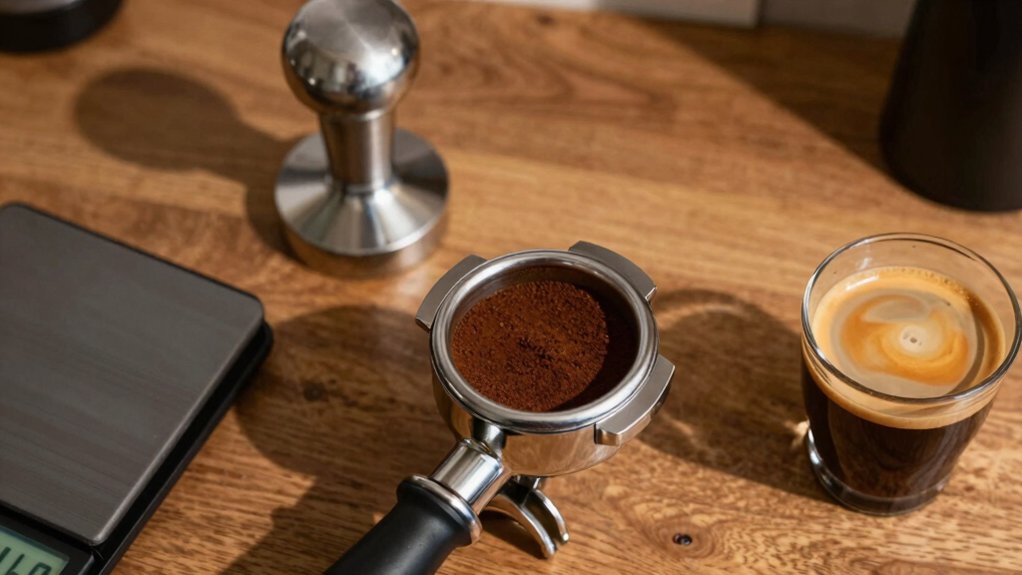
Use dose-to-yield ratios to target flavor: 1:1–1.5 for intense, 1:2 for balanced, and 1:2.5–3+ for bright. Match grind and tamp to flow; finer to slow, coarser to speed. Aim for consistent tamp (approximately 20–30 lbs).
Set water to 90–96°C and keep it stable with a PID, flushes, and proper warm-up. Low temp gives sour, thin shots. High temp brings bitterness. Follow these steps, and you’ll quickly learn how to dial in a precise, repeatable espresso.
Quick Overview
- Espresso brew ratios describe dose-to-yield (espresso in grams: liquid out grams) and guide intensity from ristretto to lungo. Common ratios are 1:1–1:1.5 (intense), 1:2 (balanced), and 1:2.5–1:3+ (brighter, lighter).
- Typical dose examples include 7–20 g doses paired with yields of 9–40 g depending on the chosen ratio. Adjust grind fineness and tamping to hit the target yield and extraction time; finer means slower, and coarser means faster.
- Keep the brew temperature at 90–96°C; it should be stable with proper preheat and group flush to control acidity and bitterness.
Dose-to-Yield Ratios Chart
Think of the dose-to-yield chart as your roadmap for dialing espresso: it shows how much dry coffee you put in, the liquid weight you’ll pull out, the expected extraction time, and which roasts and flavors each ratio highlights. You use ratios to target concentration and clarity: 1:1–1:1.5 for intense, dark profiles; 1:2 for balanced normale; 1:2.5–1:3+ for brighter, lighter roasts.
Apply contrast awareness to choose where acidity or body should dominate. Use aroma mapping to predict volatile release across yields. Adjust dose and yield to move along the concentration spectrum, noting extraction time windows for each ratio to avoid over- or under-extraction.
| Ratio | Dose (g) | Yield (g) |
|---|---|---|
| 1:1 | 9–18 | 9–18 |
| 1:2 | 7–20 | 14–40 |
Grind Setting + Tamp Pressure
How fine should you grind and how hard should you tamp to hit your target ratio and extraction time? You adjust grind setting to control flow rate: finer slows flow, coarser speeds it up. Use tamp pressure to level and compact grounds consistently; pressure affects channeling more than absolute resistance. Aim for repeatable technique: same dose, distribution, and tamp pressure deliver predictable extraction times for your chosen ratio.
- Match grind setting to target: finer for shorter yields (ristretto), coarser for longer yields (lungo).
- Use consistent tamp pressure (about 20–30 lbs as a baseline) to avoid variable channeling.
- If shot runs fast, tighten grind before increasing tamp pressure.
- If shot’s slow and over-extracted, loosen grind rather than reducing tamp pressure.
Water Temperature Range
Aim for an extraction temperature between about 90–96°C; this range balances acidity, sweetness, and bitterness for most ratios. If your water’s too cool, you’ll under-extract and get sour, thin shots. If it’s too hot, you’ll extract harsh, bitter compounds and risk scalding the coffee.
Use a stable boiler or PID, measure with a probe or infrared thermometer, and flush groups to keep temperature steady.
Ideal Brewing Range
Why does water temperature matter so much for espresso extraction? You control solubility and extraction kinetics with temperature; therefore, staying in the ideal brewing range is essential. Aim for 90–96°C (194–205°F) depending on roast and desired clarity. That window balances sweetness, acidity, and bitterness without turning to an irrelevant topic like equipment superstition or a stray concept about arbitrary numbers.
For lighter roasts, you’ll trend toward the higher end to unlock acids and aromatics. For darker roasts, you’ll favor the lower end to prevent over-extraction and excessive bitterness. Use a calibrated thermometer or built-in PID to maintain stability between shots. Adjust in small increments (1–2°C) and judge by taste rather than numbers alone.
Keep timing and ratio consistent while testing.
Too Low Effects
Lowering water temperature below the recommended 90–96°C range slows extraction so noticeably that you’ll taste underdeveloped flavors: sour, thin, and overly bright notes with muted sweetness and body. When temperature is too low, acidic compounds dominate because sugars and heavier aromatics don’t extract fully.
You’ll also notice effects on crema; it can appear pale, dissipate faster, and lack sheen. To compensate, you might grind finer or increase dose; however, changing grind setting has limits before channeling and over-extraction risks emerge.
Increasing tamp pressure slightly can help contact; yet tamp pressure won’t replace adequate heat. Excessive force can cause uneven flow. Diagnose by raising brew temperature incrementally toward the ideal range, then re-evaluate grind and tamp for balanced extraction.
Too High Risks
What happens when your brew water climbs above the 96°C mark? You risk extracting bitter, hollow flavors quickly: high temperatures accelerate soluble extraction of harsh compounds and strip delicate aromatics. That shifts perceived balance, especially at common dose to yield ratios like 18g→36g (1:2) or more concentrated ristretto ranges.
You’ll notice increased astringency, muted sweetness, and a flatter finish. Over-extraction can also exaggerate roast-derived bitterness in darker beans and hide nuanced acidity in light roasts. Mechanically, hotter water can alter flow and channeling tendencies; this makes shot consistency worse.
To judge correctly, adjust only one variable at a time and compare extractions across your standard dose to yield ratios so you can isolate temperature as the primary too high risks contributor.
Temperature Stability Tips
Consistent water temperature, ideally kept between about 90–96°C for most espresso recipes, is essential because small swings change extraction speed and flavor balance. You should aim to control and monitor it during every shot. Start by allowing your machine to fully heat up so the portafilter and group head reach equilibrium; otherwise, equipment heat-up effects create immediate temperature drift.
Stay consistent between shots: flush brief water through the group head to stabilize after idle periods. Avoid pulling multiple consecutive shots without brief recovery if your boiler struggles. If you notice systematic drift, adjust shot timing or spacing rather than changing dose or grind first.
Small, predictable temperature control preserves intended ratios and flavor clarity across routines.
Measuring Temperature Tools
Now that you’re stabilizing group-head and portafilter temperatures, you’ll want accurate tools to measure water temperature at brew time. Use a calibrated digital thermometer or a thermocouple probe for rapid, repeatable readings; they give the precision you need to evaluate temperature stability between shots.
Place the probe in a shot glass under the group to read brew water or measure directly from the boiler outlet if your machine allows. Log readings to spot drift and adjust thermostat or preheat routines.
Frequently Asked Questions
What Beans Work Best for Ristretto Versus Lungo?
For ristretto, you’ll pick beans pairing that favor dark to medium-dark roast levels to emphasize syrupy sweetness and chocolatey, low-acidity notes. Use single-origin or blended beans with caramel and roast-forward profiles.
For lungo, you’ll choose beans pairing that suit medium to light roast levels to preserve clarity, brightness, and floral or fruity acidity. Lighter single origins excel. Adjust dose and grind to match extraction and highlight each roast level’s best qualities.
How Does Water Hardness Affect Crema and Flavor?
Hard water reduces crema and mutes crema flavor by binding oils and promoting faster dispersion. You will see thinner, patchy crema and dulled aromatics.
Soft water preserves crema texture and lets acidity, sweetness, and volatile aromatics shine; however, overly soft water can taste flat. Aim for moderately hard water: balanced mineral content allows you to extract flavorful compounds without excessive dispersion. Use a water test and adjust with remineralization for consistent crema and optimal flavor.
Can I Scale Recipes for Different Basket Sizes?
Yes, you can scale recipes for different basket sizes by keeping ratio adaptation consistent and adjusting dose proportionally. Measure your target basket capacity. Then multiply the original dose by the basket’s relative size to maintain the same brew ratio.
When scaling baskets, monitor extraction time and yield; tweak grind and dose slightly if shot times shift. You’ll preserve flavor balance by prioritizing consistent ratios while fine-tuning parameters.
Should I Adjust Ratio for Milk-Based Drinks?
Yes, you should adjust ratios for milk-based drinks. You’ll often pull slightly longer or higher-yield shots (around 1:2.5–1:3) to balance milk’s dilution and sweetness.
For darker roasts, you can keep tighter ratios; for lighter roasts, increase yield for clarity. Taste and tweak: start with a 1:2 normale for double shots and experiment +5–15% yield when steaming milk until the espresso holds up and complements texture and sweetness.
How Often Should I Recalibrate My Grinder?
You should recalibrate your grinder at least once a week, or whenever you change beans, dose, or notice shot timing drift. Regular grinder calibration keeps extraction consistent and compensates for burr wear.
Also, check water filtration regularly: poor water affects scale buildup and taste, forcing more frequent tweaks. Keep a log of grind settings and extraction times; that’ll help you spot trends and decide if a calibration is needed sooner.
Conclusion
You’ve got the essentials to dial in espresso: use the dose-to-yield chart to target extraction, match grind and tamp for even flow, and keep water temperature within the recommended range.
Stay inside the ideal brewing range to avoid sourness or bitterness. Watch for risks when temperature’s too high. Maintain stability with a PID, insulated grouphead, and a quick thermometer check.
With consistent measurement and practice, you’ll brew reliably better shots.