Conical Burr Vs Flat Burr Grinder
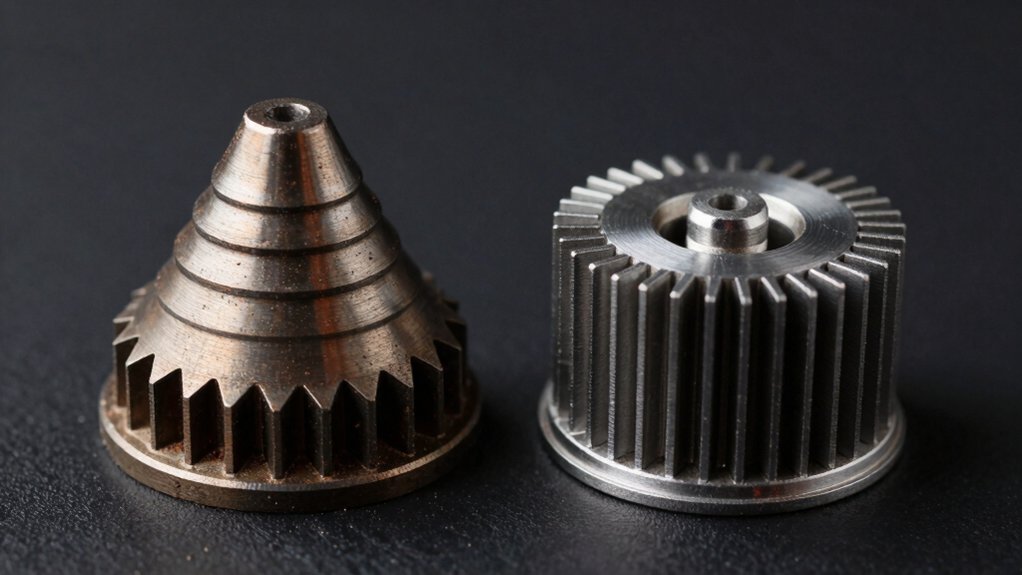
You’ll get more predictable, uniform extractions with a flat-burr grinder because it produces a tighter, unimodal particle distribution. However, it’s more sensitive to adjustments, heat, and noise at higher RPMs.
Conical burrs are quieter, cooler, and more forgiving; they give bimodal output that’s easier to dial in for varied workflows and long sessions. Match burr diameter and material to your volume: larger steel burrs for durability, ceramics for low-heat.
Keep going and you’ll learn the trade-offs in detail.
Quick Overview
- Flat burrs give a more uniform, unimodal particle distribution, improving extraction predictability for espresso and pour-over.
- Conical burrs produce a bimodal mix (fines + larger particles); this is more forgiving for inconsistent dosing and home use.
- Flat burr grinders are more sensitive to adjustments; thus, dialing-in requires finer increments and consistency.
- Conical grinders run at lower RPMs, generating less heat, noise, and vibration during long or variable dosing.
- Choose burr diameter and material by workload: larger steel burrs for high-volume cafés; ceramic or smaller conicals for quieter home use.
Grind Size Consistency Comparison
How consistent do you need your grind? You’ll notice flat burrs give uniform particle sizes, translating to predictable extraction. Conical burrs create a bimodal spread with fines and larger bits, which can add complexity but reduce predictability.
Flat designs often pair larger burr diameter and specific material choices with higher motor rpm to maintain precision. In contrast, conicals run slower and tolerate looser tolerances.
| Feature | Flat Burrs | Conical Burrs |
|---|---|---|
| Particle distribution | Unimodal, uniform | Bimodal (fines + boulders) |
| Extraction predictability | High | Moderate |
| Dialing sensitivity | High | Low |
| Heat/noise influence | Higher rpm → more heat/noise | Lower rpm → quieter/cooler |
You’ll pick based on how much repeatability versus character you want.
Burr Diameter & Material
Why does burr diameter matter so much? You’ll notice larger burr diameter increases bite per rotation, improving consistency and lowering heat buildup.
Choice of burr material also shapes durability and flavor: steel stays sharp longer and resists chipping, while ceramic stays cooler but can be brittle.
Larger burr diameter gives slower RPM for same throughput, reducing heat and preserving aroma. Smaller diameter fits compact grinders but may need higher RPM; this risks more fines. Hardened steel burr material handles oilier, darker roasts without rapid wear. Ceramic burr material reduces metallic transfer and stays cooler during long sessions.
Match burr diameter and burr material to your workflow: home, café, or high-volume settings.
Motor RPM Effects
You’ll notice motor RPM shapes everything from heat and noise to how evenly the grounds come out. Higher RPMs on flat-burr machines bring more torque and speed; however, they also bring more heat, vibration, and the risk of uneven fines.
Slower, torquey motors in conical designs run quieter and cooler but can change particle distribution under load. Let’s look at how speed, torque, and thermal build-up interact with grind consistency and noise, so you can weigh the trade-offs.
Motor Speed Impact
Often the motor speed, measured in RPM, directly shapes how a grinder performs. You will notice its effects in grind consistency, heat generation, and noise. You should think of motor speed as a control knob: higher RPMs push beans faster through flat burrs, tightening particle distribution. Lower RPMs suit conical designs that rely on gravity.
That topic pair, speed versus burr geometry, helps explain why some grinders need beefier motors. You are not asking whether heat exists here; that is irrelevant to the listed H2s. However, you do care about how RPM affects retention, static, and audible whine. In practice, you will prefer a balanced RPM: high enough for consistency with flats and low enough for quieter, gentler conical operation that preserves bean integrity.
Heat Generation Differences
How much does motor speed actually change the heat your grinder makes? You’ll notice higher RPM motors, common in flat burr machines, create more friction and heat as burr faces collide more often. That extra heat can dull grind aroma if it warms beans enough to volatilize fragile compounds during a long dosing cycle.
Conical designs usually run slower; gravity and the bean shape feeding into the burrs reduce required torque. So, less motor work means less temperature rise. You shouldn’t assume small temperature differences will wreck extraction; however, they matter for delicate light roasts and long grinding sessions. If you care about preserving aroma, favor lower RPM or dose in short bursts to limit heat transfer to grounds.
Grind Consistency Changes
Why does motor speed matter for grind consistency? You’ll notice motor RPM directly affects how quickly beans meet burr edges, altering particle breakage patterns. Higher RPM on flat burrs tends to push beans through more uniformly, reinforcing their unimodal distribution. Lower RPM on conicals emphasizes the bimodal mix of fines and boulders by allowing different fracture modes.
That makes motor speed a practical lever you can use to tune extraction balance. Consider subtopic relevance when comparing models: two grinders with identical burrs can perform differently solely due to their drive speed. You shouldn’t conflate RPM with torque; that’s the next section. However, you should watch speed during testing.
Future research could quantify optimal RPM windows per burr geometry for repeatable results.
Torque And Load
Curious how torque and load change what you get in the cup? You’ll notice motor RPM affects how burrs handle beans: flat burrs usually need higher RPM and stronger motors; so torque stability matters to keep particle size consistent when the hopper dumps lots of beans.
Conical designs run slower and use gravity to help feed beans; thus, load distribution across the burrs is gentler and motor demands drop. That means conical grinders tolerate variable dosing with less impact on grind profile, while flats rely on steady torque stability to maintain unimodal output.
When you choose a grinder, think about how RPM, motor torque, and load distribution interact with your dosing habits and desired cup clarity.
Noise And Vibration
Ever notice how some grinders chatter while others hum? You can map that difference with noise profiling: flat burrs usually need higher motor RPM and generate a louder, sharper signature, while conical grinders run slower and sound smoother. Higher RPM increases vibration sources; motor imbalance, gear meshing, and burr resonance all amplify noise and perceptible shaking.
You’ll feel more vibration in heavier flat-burr units because stronger motors transfer more torque into the chassis. That vibration can affect long-term alignment and tiny shifts in grind consistency. When choosing, consider measured decibel levels and where vibration transmits: countertop coupling, mounting, and damping matter. Opt for designs with balanced rotors, isolation mounts, or lower RPMs if you prioritize quiet, stable operation.
Frequently Asked Questions
Do Flat Vs Conical Burrs Affect Coffee Crema Quality?
Yes, burr type can influence crema texture and crema stability, though it’s indirect. You’ll get finer, more uniform particles from flat burrs; this often yields a thinner, more stable crema with clearer flavor.
Conical burrs produce more fines and boulders, giving a thicker, creamier crema that can collapse faster. Ultimately, grinder design, dialed grind distribution, and freshness matter more than burr shape alone for crema quality.
Which Burr Type Requires More Frequent Burr Replacement?
Flat burrs usually need more frequent burr replacement. You’ll see burr wear sooner on flats because higher RPMs and greater motor force accelerate dulling, which degrades grind consistency faster.
Conical burrs run slower and use gravity-fed feeding; they generally last longer before you notice consistency loss. Still, actual replacement intervals depend on roast level, bean oils, and weekly volume. Therefore, monitor performance and replace when grind consistency drops.
How Do Burrs Influence Espresso Shot Temperature Stability?
Burrs influence espresso shot temperature stability by changing grind consistency and heat transfer; you’ll see subtle shifts during extraction. If your burrs heat up, burr temperature stability drops and extraction can warm. This alteration can affect crema quality and mouthfeel.
You’ll want stable, cool burrs for repeatable shot temps. Regular burr maintenance and proper motor cooling help. Adjust dosing and pre-infusion to compensate when grinders run warmer.
Can Burr Type Impact Grinder Noise During Idle Periods?
Yes, burr type can affect burr noise and idle sound. You’ll usually hear less idle sound from conical setups because they run at lower RPM and use gravity-fed designs. This means motors strain less.
Flat burr grinders often need bigger, faster motors and sturdier housings; therefore, their idle burr noise tends to be higher. Still, build quality, motor mounts, and damping matter more than burr shape alone.
Are There Differences in Maintenance Difficulty Between Burr Types?
Yes, you’ll notice a maintenance difficulty contrast: flat burrs often trap more grounds and need more disassembly. So, cleaning accessibility nuances matter more. Conical designs usually shed grinds better and let you access burrs with simpler, vertical removal. This makes routine cleaning quicker.
Both still require regular brush-outs and occasional deep cleans. Your specific grinder’s design and how it lets you remove burrs or hopper parts determine real-world ease.
Conclusion
You’ll pick the right grinder by balancing what matters most: conical burrs tend to be quieter, generate less heat at low speeds, and handle oily beans with forgiving torque. Flat burrs often deliver slightly tighter grind consistency at higher RPMs.
Consider burr diameter and material, motor speed, and how heat or vibration affect flavor. Match the grinder to your brewing method and routine, and you’ll get more consistent cups with fewer frustrating adjustments.