Espresso Shot Troubleshooting Chart
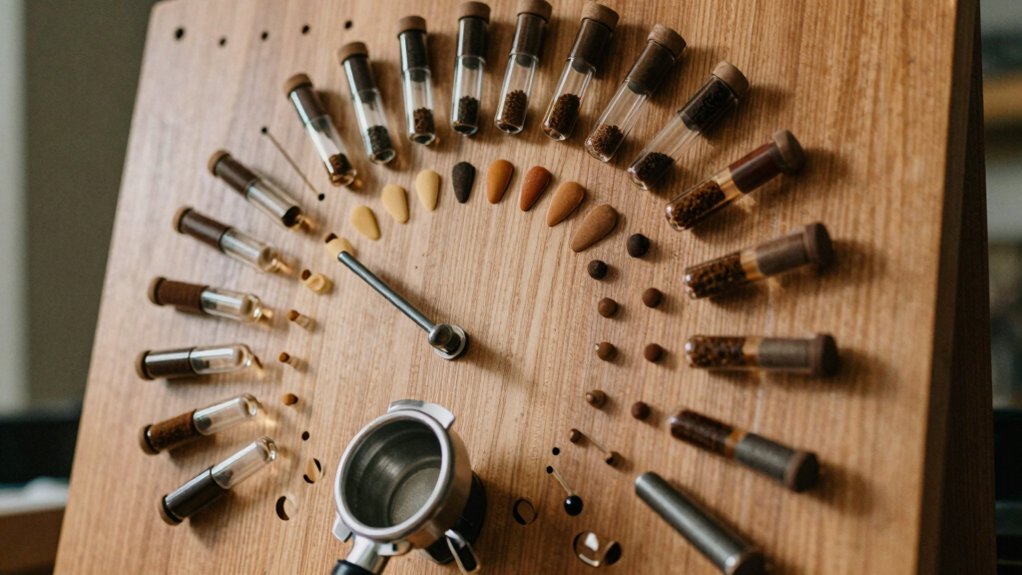
You’ll use a simple shot troubleshooting chart to link dose, grind and time to clear flavor targets.
Aim 15–18s for ristretto, 25–30s for standard doubles and 45–60s for lungos.
Adjust grind first: finer if under 27s; coarser if over 35s. Keep dose, distribution and tamp constant when you change grind.
Log dose, yield, grind clicks and time, and prioritize distribution to stop channeling.
Continue and you’ll learn precise steps to lock in consistency.
Quick Overview
- Log dose, yield, grind setting, and time for each shot to build a reproducible troubleshooting chart.
- Use grind as primary control: finer if extraction 35s; change one variable at a time.
- Target 27–35s for a 60 ml double; adjust dose/yield/time to reach bright, balanced, syrupy, or mellow.
- Run 8–22s diagnostic pulls to reveal channeling, uneven flow, or puck prep issues. Watch sidecar crema.
- Prioritize distribution (WDT/needle, tap-and-level) and manage retention/static to prevent channeling and unstable times.
Shot Extraction Time Matrix
The Shot Extraction Time Matrix gives you a precise map of how dose, yield, brew ratio, and time interact so you can dial shots predictably. Use the table to match your target flavor (bright, balanced, syrupy, or mellow) with the appropriate dose and extraction window. Then adjust grind, tamp, or temperature to move extraction into that range.
You’ll use 15–18s for ristretto brightness, 25–30s for a balanced double, and 45–60s for lungos. Prioritize Calibration vs consistency: log dose, yield, grind setting, and time. Maintain water temp stability and stopwatch timing. Use a double-spout portafilter and scales for diagnosis; check before service and hourly in busy cafes.
| Type | Dose (g) | Time (s) |
|---|---|---|
| Ristretto | 18 | 15–18 |
| Standard | 19–20 | 25–30 |
| Lungo | 17–18 | 45–60 |
8–22s Standard Pull
Precision matters when you aim for a 2s standard pull: you’re intentionally producing a brief, concentrated pour that reveals puck resistance and machine responsiveness without being a full ristretto. You use this test to confirm puck prep, dose consistency, and pressure profile while watching for sidecar crema that signals uneven flow.
The short pour highlights channeling, grind extremes, and tamp issues quickly so you can adjust before service. Note how the concentrated cup will affect milk integration later. If texture falters, the shot likely needs refinement.
- Time: use a stopwatch; record deviations under 2–3 seconds.
- Visuals: watch for sidecar crema or thin streams.
- Adjust: tweak distribution or dose, not temperature.
- Purpose: diagnostic pull to inform final extraction.
Grind Setting Ranges
You’ll set grind ranges by moving finer for under-extracted, sour shots and coarser for slow, bitter pulls while watching time and yield. Match those adjustments to bean age and roast; keep grind changes small and repeatable for consistent dialing in. Control distribution to prevent channeling.
Watch retention and static. Clear the chute and check dose after changes so your settings stay reliable.
Finer Versus Coarser
How fine should you set your grinder to hit 60 ml in 27–35 seconds? You’ll treat grind adjustment as the primary control: move finer vs coarser in small, consistent steps and time each shot. If shots run under 27 seconds, dial finer to increase resistance. If over 35 seconds, dial coarser to reduce it.
Record setting changes and stick to one variable at a time: dose, tamp, and distribution must remain constant. Don’t operate on coarser ignorance or assume large jumps fix issues; tiny increments preserve balance and reveal trends. Use a stopwatch and double-spout pull for direct comparison.
Aim for repeatable adjustments. Then validate by taste and shot dynamics rather than guesswork.
Adjusting For Beans
Where should you start when a new batch of beans lands in the hopper? Begin by noting roast level and age. Then set your grinder to a middle-range baseline for that profile. Light, fresh beans usually need finer settings; darker or older beans need coarser.
Adjust in small steps: one click or 1–2 grind steps. Then time a double shot. Listen: increased bean fluff or louder kitchen noise during dosing can signal static or clogging that alters flow. Clear the chute and retest.
Track range windows that consistently hit 60ml in 27–35 seconds for each bean lot. Record initial setting, ambient conditions, and results. Use those ranges as starting points, not absolutes. Always verify extraction time before service.
Dialing In Consistency
Why aim for consistent grind ranges? You need repeatable extraction times and predictable taste. Establish a narrow range around your target shot: note the grind step that yields 27–35 seconds for 60ml doubles, then lock it in. Use systematic grinder calibration: mark settings, record dose, and time each pull. If times drift, check burr wear and recalibrate before changing recipes.
Eliminate variables that mimic grind issues. Inconsistent tamping skews resistance and hides true grind changes. Train tamp pressure and use the same basket and dose. When you alter roast or origin, move in small increments within your established range and retest. Consistency here isolates real flavor differences so adjustments are precise, fast, and reliable.
Grind Distribution Tips
Now that you’ve locked in a stable grind range and tamp routine, focus on distribution before tamping to keep that consistency meaningful. You’ll want a uniform bed so water meets even resistance; uneven clumps invite channeling.
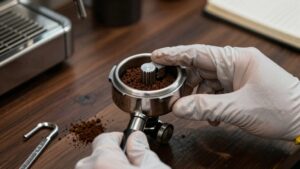
Use a WDT tool, needle agitation, or a precise tap-and-level to break voids and level the surface. Aim for repeatable movements and minimal puck disturbance so your grind setting range stays valid. After tamping, inspect the puck for seams or radials that predict channeling.
If you see early spirals or weak starts, adjust distribution technique rather than grind size first. Many channeling fixes come from poor preparation, not burr changes. Keep records: technique, dose, and extraction time to refine reliably.
Retention And Static
How much coffee clings inside the grinder and portafilter can quietly wreck your dose consistency and extraction times. You need to measure and manage retention and static as part of your grind-setting routine. You’ll weigh beans before and after a grind run to quantify retention; note grams held in the hopper, chute, burrs, and portafilter.
If dose swings appear, clear trapped coffee and adjust grind speed or chute geometry. Static tangents matter: low humidity and fast burr rotation boost cling. Use anti-static tools, a grounding brush, or a brief humidity control.
Don’t buy retention myths that blame only the burrs; feed rate, chute design, and handling all influence holdover. Track changes and standardize your workflow for repeatable extraction.
Frequently Asked Questions
How Often Should I Backflush the Group Head?
You should backflush frequency weekly with detergent and daily with water for reliable group head maintenance. For home machines, backflush with water after each day’s use. Run a detergent backflush once a week.
In busy cafes, perform water backflushing hourly during service and a detergent cycle at least once daily or during end-of-day cleaning. Always follow manufacturer guidance and use the correct blind filter and cleaner to protect seals and brewing quality.
Can Water Hardness Affect Crema and Flavor?
Yes, water hardness affects crema stability and flavor impact. You’ll notice that high mineral content can boost crema initially but leave metallic or chalky flavors and scale buildup.
Very soft water produces weak crema and muted taste. You should balance mineral content for optimal extraction: enough hardness for body and crema stability, but not so much that it alters flavor or clogs equipment. Test and adjust with appropriate filtration.
How Do I Adjust for High-Altitude Brewing?
You lower brew temperature, grind finer, and extend contact time for high altitude brewing adjustments. You’ll compensate for lower boiling point by increasing extraction temperature 2–4°C and dialing in a slightly finer grind to slow flow.
Pull shots a few seconds longer; watch crema and taste. Use consistent timing with the group head backflushing routine to keep dispersion and heat stable. Taste and tweak until balanced.
What’s the Best Way to Store Opened Coffee Beans?
Store opened coffee beans in an airtight container in a cool, dark place to preserve store freshness and minimize air exposure. Use opaque, sealable storage containers and avoid the fridge or freezer for daily-use beans.
Grind just before brewing and adjust grinder tuning as beans age: slightly finer if flow speeds up. Buy smaller amounts, keep bags sealed with one-way valves, and label dates so you rotate stock for optimal flavor.
Can Milk Temperature Alter Perceived Espresso Bitterness?
Yes, can milk temperature alter perceived espresso bitterness? Absolutely. You’ll notice temperature bitterness shifts: hotter milk amplifies bitter notes, while cooler milk mutes them and highlights acidity.
Heating also changes crema flavor by breaking down emulsified oils and dispersing crema into the cup. This softens perceived intensity. Aim for 55–65°C (130–149°F) for balance; adjust slightly to match roast and personal taste.
Conclusion
You’ve now got a clear, actionable map: aim for extraction times in the 8–22s matrix, move the grinder finer for slow pulls and coarser for fast ones, and tweak based on bean roast and age.
Keep your dose, tamp, and distribution consistent. Minimize retention and static, and make single-variable changes when dialing in. Follow these steps methodically; your shots will become reliably balanced and repeatable.