Espresso Basket Sizes Explained
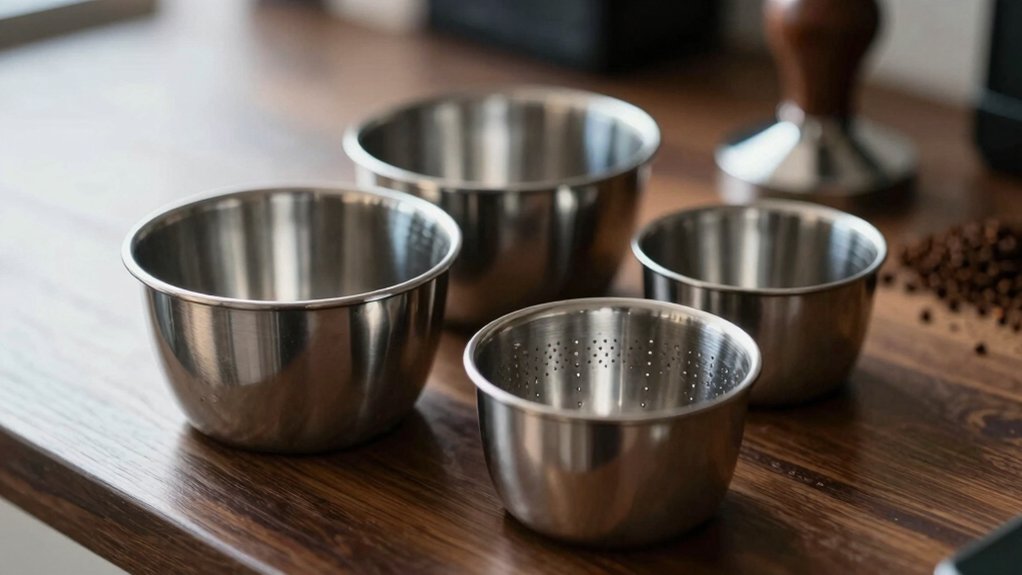
Espresso basket size affects dose, extraction and fit. You’ll want to match diameter, depth and rim to your portafilter. Wider 58mm baskets take 18–22g and give fuller extraction; 54–51mm commonly use 14–16g. Meanwhile, 49mm spans about 11.5–16g.
Deeper baskets let you raise dose without losing headspace. Shallower ones need tighter dosing and finer grind. Rim thickness and material affect seating and wear. Keep measurements consistent and you’ll get steadier shots; more specifics follow.
Quick Overview
- Basket diameter (e.g., 49, 51, 54, 58 mm) dictates dose range; 58 mm is typically for 18–22g and smaller diameters are for lower doses.
- Basket depth controls puck volume. Deeper baskets accept higher doses without sacrificing headspace or increasing channeling risk.
- Match dose to basket capacity within ±1g to maintain proper puck geometry and consistent extraction yield.
- Rim thickness and finish affect seating and spigot fit. Measure with calipers and aim for snug, minimal lateral play.
- Material and machining quality (stainless rims, even bore, no burrs) determine durability, seal reliability, and even flow.
Diameter vs Capacity Chart
How do diameter and basket capacity work together to shape your shot? You’ll notice larger diameters like 58mm pair with 18–22g baskets to produce fuller extraction and higher TDS. Meanwhile, smaller 51–54mm units use 14–16g capacities for sharper, more grind-sensitive results.
Watch for diameter mismatch when swapping portafilters. Dosing calibration is essential to keep headspace and pressure consistent. Match tamper size and adjust grind and dose within ±1g of capacity to avoid channeling. Below is a quick reference you can scan before changing equipment.
| Diameter | Typical Capacity |
|---|---|
| 58mm | 18–22g |
| 54mm | 14–16g |
| 51mm | 14–16g |
| 49mm | 11.5–16g |
Depth, Diameter, Dose Guide
You’ve seen how diameter and capacity pair to shape extraction. Now consider depth: the hidden dimension that completes the equation. In the depth discourse you balance dose and puck geometry. Deeper baskets let you increase dose without reducing headspace; shallower ones demand tighter dosing and finer grind.
The diameter debate matters too. Wider baskets (58mm) diffuse flow; smaller ones concentrate it. Your chosen depth must match diameter to avoid channeling.
- Match dose to depth: keep dose within ±1g of basket capacity for proper puck formation.
- Increase depth for higher doses (20–25g) to maintain resistance.
- Reduce depth with smaller diameters to keep even flow.
- Test adjustments incrementally and note extraction yield.
Spigot-Compatible Basket Rim Thickness
When you check spigot-compatible baskets, rim thickness is a small measurement that makes a big difference. Standards vary, and a few tenths of a millimeter can prevent proper seating. You’ll want to measure rim dimensions carefully and compare them to your portafilter spigot profile. Since mismatches cause leaks, wobbles, or a basket that won’t lock in, careful consideration is essential.
Also consider material and durability: thicker stainless rims resist deformation but can create clearance issues on tight spigots. Thinner rims may wear faster.
Rim Thickness Standards
Why does rim thickness matter for spigot-compatible baskets? You want a rim thickness that ensures a snug, repeatable seal against the spigot without distorting under clamping force. Manufacturers typically spec stainless steel rims between about 0.8 mm and 1.6 mm for commercial-style baskets: thin enough to seat cleanly, thick enough to resist bending and corrosion.
Thicker rims increase durability and maintain concentricity; however, they can change how the basket sits and alter headspace slightly. Thinner rims seat easier in worn spigots and can improve water flow consistency when tolerances are tight; yet, they risk deformation over time.
When choosing a basket, match rim thickness to your machine’s spigot design and maintenance level to keep seals reliable and extraction consistent.
Spigot Compatibility Issues
How tightly should your basket rim match the spigot? You want close spigot compatibility without forcing parts. If the rim thickness is too thin, the basket can wobble and leak. If it is too thick, it won’t seat; this can cause uneven water flow or a stuck basket.
Aim for a rim thickness that allows a snug drop-in fit with minimal lateral play while still clearing the spigot collar. Check manufacturer tolerances: many portafilters accept small variations, but aftermarket baskets sometimes push limits. When swapping baskets, test for smooth engagement and a consistent seal. You shouldn’t need excessive force.
If you feel binding or see gaps, choose a different basket or consult spec sheets to avoid compromise in extraction.
Measuring Rim Dimensions
After checking fit against the spigot, you’ll want to measure the basket rim thickness to assure a snug, wobble-free seat. Use calipers to record rim diameter and rim thickness at multiple points: front, back, left, right. This helps to detect unevenness. Note the finished rim diameter against portafilter spec; even 0.2mm variance can shift seating.
Check thickness where the spigot bears load, since uneven thickness alters weight distribution and can tilt the basket during tamping. If you find high spots, gently file and re-measure, keeping tolerances tight. Document measurements so you can match replacement baskets or tampers precisely. Consistent rim dimensions prevent leaks and channeling. This ensures the basket aligns with the spigot for reliable, repeatable extraction.
Impact On Basket Fit
Wondering whether a few tenths of a millimeter really matter? You’ll notice rim thickness affects how a spigot-compatible basket seats in the portafilter. A slightly thicker rim can stop a basket from sitting flush, compromising seal and causing channeling. Conversely, too thin a rim can wobble under pressure.
Pay attention to size compatibility between basket rim and portafilter spigot; manufacturers vary by fractions of a millimeter. That variation also interacts with grind sensitivity: finer grinds amplify any fit imperfections, making extraction inconsistent. Check rim tolerances and try spare baskets before committing to a dosing routine.
If you detect leaks or uneven flow, swap baskets or adjust grind and dose until the basket seats snugly. Small changes yield big extraction improvements.
Material And Durability
Curious which basket rim materials hold up best when you’re swapping spigot-compatible baskets frequently? You’ll want stainless steel rims with thicker spigot-compatible profiles; they resist deformation and keep a tight seal on the portafilter. Brass and plated alloys can look good, but they wear faster at the thin rim where the spigot locks, compromising material durability and alignment over time.
Check rim thickness: thicker rims spread clamp force, reduce micro-movement, and cut long-term wear on both basket and portafilter. If you swap baskets daily, choose precision-machined stainless or hardened steel options. Inspect mating faces routinely for burrs. Proper rim design saves you tuning time and preserves consistent extraction across different basket sizes.
Frequently Asked Questions
Can I Use Different Baskets Interchangeably Between Machines?
You can sometimes swap baskets, but it depends on different standards and material compatibility. You’ll need matching portafilter diameter, basket capacity, and tamper size. 58mm and 58.5mm tampers can differ. Metal type rarely affects extraction; fit and hole pattern do.
If you change basket sizes, you’ll adjust grind, dose, and tamping. Test shots and check headspace. Don’t force a basket into a mismatched portafilter.
How Often Should I Replace Metal Baskets for Best Performance?
Replace metal baskets every 1–2 years with regular use; or sooner if you spot damage, pitting, or clogging that affects flow. If you’re new to coffee, inspect baskets monthly during daily maintenance. Descale or soak them weekly depending on use.
Worn holes or warped rims mean diminished extraction and uneven shots. Swap to a fresh, precision basket to restore consistent taste and puck behavior.
Do Basket Hole Patterns Affect Crema Texture?
Yes, basket hole patterns do affect crema texture. You’ll notice different hole sizes, counts, and layouts change flow resistance and turbulence. This alteration affects emulsification of oils and gas release.
Precision patterns (like VST) give more consistent crema texture and thickness; larger or uneven holes can make patchy or thinner crema. Match basket hole patterns to dose, grind, and tamp. You’ll get steadier, creamier results.
Can I Retrofit a 58MM Basket Into a 54MM Portafilter?
No, you can’t safely retrofit a 58mm basket into a 54mm portafilter. Basket compatibility depends on portafilter sizing and ledge fit. A 58mm won’t seat or seal in a smaller 54mm throat.
For best extraction, you should match basket diameter to portafilter sizing or swap the entire portafilter for a 58mm unit. Using adapters or force-fitting risks channeling, leaks, and damaged parts.
Are Precision VST Baskets Worth the Extra Cost?
Yes, precision baskets are worth the extra cost if you care about consistency and crema texture. You’ll get tighter manufacturing tolerances, matched hole patterns, and predictable resistance; so shots extract more evenly and repeatably. That lowers wasted beans and dialing time.
If you’re casual or on a budget, stick with standard baskets. However, if you chase consistent flavor and richer crema, the upgrade usually pays off.
Conclusion
You’ve now got what you need to pick the right basket: match diameter and depth to your dose, check rim thickness for spigot compatibility, and favor durable materials for long-term fit.
Measure carefully: diameter across the top and rim thickness at the edge. Compare to your machine’s specs before buying. Doing that prevents leaks, jams, and wasted coffee. Your shots’ll be consistent, clean, and easy to pull every time.