Espresso Grind Size Range Reference
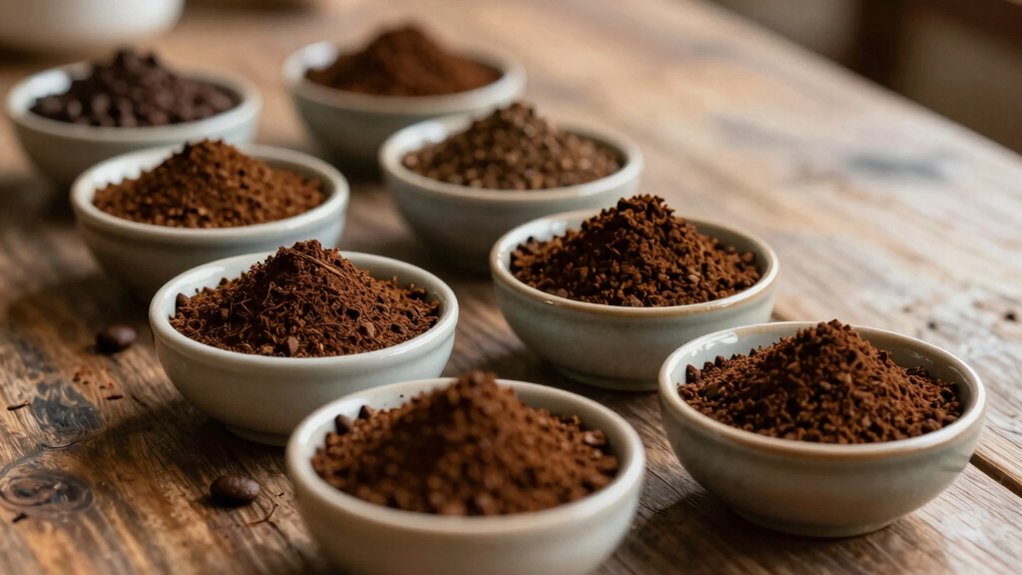
You’ll set your grinder between very fine (near powdered sugar) and fine (like table salt) to land espresso extractions in the 18–30 second window. Finer increases resistance and slows flow; coarser speeds it and risks under‑extraction.
Start with a 1:2 dose:yield (e.g., 18g → 36g). Tamp consistently around 20–30 pounds and adjust grind before changing dose. Track tamp force, dose, yield, and time so you can tweak grind and pressure for repeatable shots. More detail follows.
Quick Overview
- Espresso grind ranges from very fine (close to powdered sugar) to fine sand; adjust so extraction time targets 25–30s single and 18–22s double.
- Finer grinds increase resistance and slow flow. Expect longer contact times and higher yield if grind is tightened.
- Coarser grinds speed flow and lower yield, risking under-extraction if contact time becomes too short.
- Use 1:2 dose-to-yield as a starting ratio (e.g., 18g → 36g) and adjust grind before changing dose.
- Maintain consistent, level tamping (approximately 20–30 lb) and record tamp, dose, and timing for repeatable grind adjustments.
Grind Size vs Extraction Time
How fast should your grind move water through the puck? You’ll control extraction timing by adjusting Grind Size and maintaining even grind distribution so water extracts uniformly. Finer grinds increase surface area, raise resistance and slow flow; this moves you toward 25–40 seconds and higher yield. However, too fine risks channeling and bitter, muddy flavors. Coarser grinds speed flow, lower yield and cause under-extraction if contact time’s too short. Aim for espresso standards (25–30s single, 18–22s double) and tweak grind in small steps per your grinder.
| Grind Size | Typical Effect |
|---|---|
| Fine | Slower flow, higher yield |
| Medium | Moderate flow, balanced |
| Coarse | Faster flow, lower yield |
Dose-To-Yield Ratios
After you’ve dialed grind and extraction time, dose-to-yield ratios determine how concentrated and balanced your shot will be. You’ll use dose-to-yield (D:Y) to target strength and extraction efficiency: a common starting point is 1:2 (e.g., 18g in → 36g out). Maintain dose consistency to compare adjustments reliably. Grind size interacts with D:Y; finer grinds slow flow, altering yield for the same dose.
- 1:2 classic — balanced sweetness and body; adjust grind size before dose.
- 1:1.5 — shorter yield, brighter, higher perceived acidity; requires precise dose consistency.
- 1:2.5–3 — longer yield, more dilution, risk of over-extraction if grind too fine.
- Track weights and times; iterate empirically for reproducible shots.
Tamping Pressure Guidelines
When you tamp, aim for a consistent pressure; typically 20–30 pounds is a practical target measured at the tamper. Use a calibrated tamper or pressure gauge to verify force. Adjust slightly for higher or lower doses, and prioritize repeatable technique over brute strength.
Focus on level tamping, even distribution, and a controlled finish to reduce channeling. This approach will help keep extraction within the 25–30 second window.
Proper Pressure Range
Tamping pressure guides how evenly water travels through your puck. Aim for a consistent, moderate force rather than an exact psi number; typically 15–30 pounds of pressure is recommended by many baristas and manufacturers. You should use steady tamping to create uniform resistance that complements your grind size and target extraction time.
If you vary pressure shot-to-shot, you’ll change flow rate and cause channeling or uneven extraction. Use a calibrated tamper or a technique that repeats the same feel, and check puck surface for levelness. Match tamping consistency to dose and basket size; don’t compensate for a too-fine grind by over-tamping. Measure results by timing and yield, then make small grind or dose changes rather than large tamp adjustments.
Consistency Over Force
Why does consistent tamping matter more than brute force? You should prioritize a consistency focus because uniform bed density, not maximal pressure, determines extraction predictability. Research and barista practice show that applying the same, controlled tamp yields repeatable resistance and reduces channeling risks.
Aim for a steady, level tamp; typically around 20–30 kgf equivalent. Make repetition your variable, not force. Use a firm wrist and straight vertical motion so grounds compress evenly, promoting an even flow across the puck.
Overly variable pressure creates micro-paths; excessive force compacts fines and slows flow unpredictably. When you focus on repeatable technique, small grind or dose tweaks become reliable. Consistent tamping simplifies dialing in grind size and stabilizes shot times and flavor.
Pressure Measurement Tools
How do you know you’re applying the same tamp every time? Use pressure measurement tools: calibrated tamp meters or simple bathroom scales with a tamper adapter to quantify force and reduce variability. Aim for a consistent range, typically 20–30 kgf, and record values alongside coffee grinder calibration settings so you can correlate tamp pressure with grind steps.
Consistent tamping stabilizes puck density; this makes espresso shot timing more reliable. Inconsistent pressure shifts flow rate and alters extraction time. Validate by running back-to-back pulls after small grind adjustments and noting shot timing and taste. Evidence shows mechanical consistency reduces shot-to-shot variance more than forceful tamping.
Train technique around measured targets, not feel. Log results for reproducible dialing-in.
Adjusting For Dose
Since you’ve started measuring tamp force, you can now factor dose into those readings to refine consistency: heavier doses compact more easily and often need slightly higher tamp pressure to achieve the same puck density. Lighter doses require less force to avoid overdensity and channelling.
Use a repeatable tamp pressure chart tied to specific doses; record tamp force, dose grams, and resulting flow time to quantify how dose changes extraction. Aim for dose stability first: consistent grams in the basket reduces one major variable.
Monitor puck resistance and extraction time. If heavier doses shorten flow excessively, increment tamp force in small, measured steps while checking grind consistency remains unchanged. This evidence-based approach narrows variability and improves repeatable shot quality.
Tamping Technique Tips
Wondering what tamp pressure you should use? Use a consistent 20–30 pounds of force as a guideline: research and barista practice show this range yields reliable extraction without compacting fines excessively.
Focus on a steady tamping rhythm: smooth, level, and repeatable; rather than squeezing harder. Start by checking distribution balance in the basket: properly distributed grounds need only light leveling before tamping.
Hold the tamper perpendicular, apply even pressure, and finish with a brief polish or twist to seat the puck, avoiding rim disturbance. If shots run too fast, refine distribution balance and slightly increase pressure. If they’re slow or choked, check grind and dose first.
Consistency beats maximal force for predictable 25–30 second shots.
Frequently Asked Questions
How Does Humidity Affect My Espresso Grind Consistency?
Humidity impacts grind consistency by making particles stickier and clump; so you’ll see more fines and uneven extraction. You should monitor humidity impact on grind consistency and adjust for ambient humidity vs storage humidity: grind in stable, lower ambient humidity when possible and keep beans sealed to limit storage humidity.
You’ll compensate with slightly coarser settings during high humidity. Clean the grinder often, and retest flow times to maintain balanced shots.
Can I Use Paper Filters With Espresso Baskets?
Yes, you can use paper filters with espresso baskets, but they change extraction and crema. Paper filters reduce oils and fines; this produces cleaner, less viscous shots with muted body. Fit and basket type matter: Use thin, well-cut paper designed for espresso baskets to avoid channeling and preserve pressure.
You’ll need to adjust grind slightly finer and watch shot time. Test and dial in dose, tamp, and flow to maintain balance.
What Maintenance Keeps Burrs Cutting Uniformly?
You should clean, inspect, and recalibrate regularly to keep burrs cutting uniformly. Set a maintenance cadence: weekly brush and vacuum, monthly deep clean with burr removal and solvent wipe, and quarterly full inspection with calibration.
Check burr alignment each service. Replace worn burrs per manufacturer specs, and log grind consistency tests and shot flow times. Consistent dosing and avoiding oily beans will also extend burr life and preserve uniform cutting.
Do Different Roast Levels Need Different Grind Ranges?
Yes, you’ll tweak grind size for roast level. Darker roasts extract faster; you’ll grind slightly coarser to avoid over-extraction. Lighter roasts often need finer grinds to achieve balanced extraction.
Maintain temperature control and dose consistency while dialing in since those factors interact with grind adjustments. Make small changes, test shot time and taste, and prioritize uniform particle distribution for reliable, repeatable results.
How Long Can Ground Espresso Be Stored Before Flavor Loss?
You should use ground espresso within 15–30 minutes for peak flavor. Sealed storage can preserve usable taste for 24–48 hours. For espresso storage, keep grounds airtight, cool, and dry; humidity impacts on grind accelerate grind aroma decay.
Choose filters compatible with espresso shots and maintain burr maintenance for consistency. Adjust for roast level grind range adjustments when dialing in: darker roasts may need slightly coarser settings to avoid over-extraction.
Conclusion
You’ve learned that grind size, dose-to-yield, and tamping all work together to control extraction time and flavor. Aim for 9–11 bars of brew pressure. Keep tamping consistent (not maximal), and adjust grind and dose before changing pressure.
Use a calibrated gauge or digital scale for repeatability. Make small, evidence-based tweaks: grind finer for faster flow control; coarser to shorten extraction. Prioritize consistency over force to reproduce great shots.